
Last updated October 31, 2026
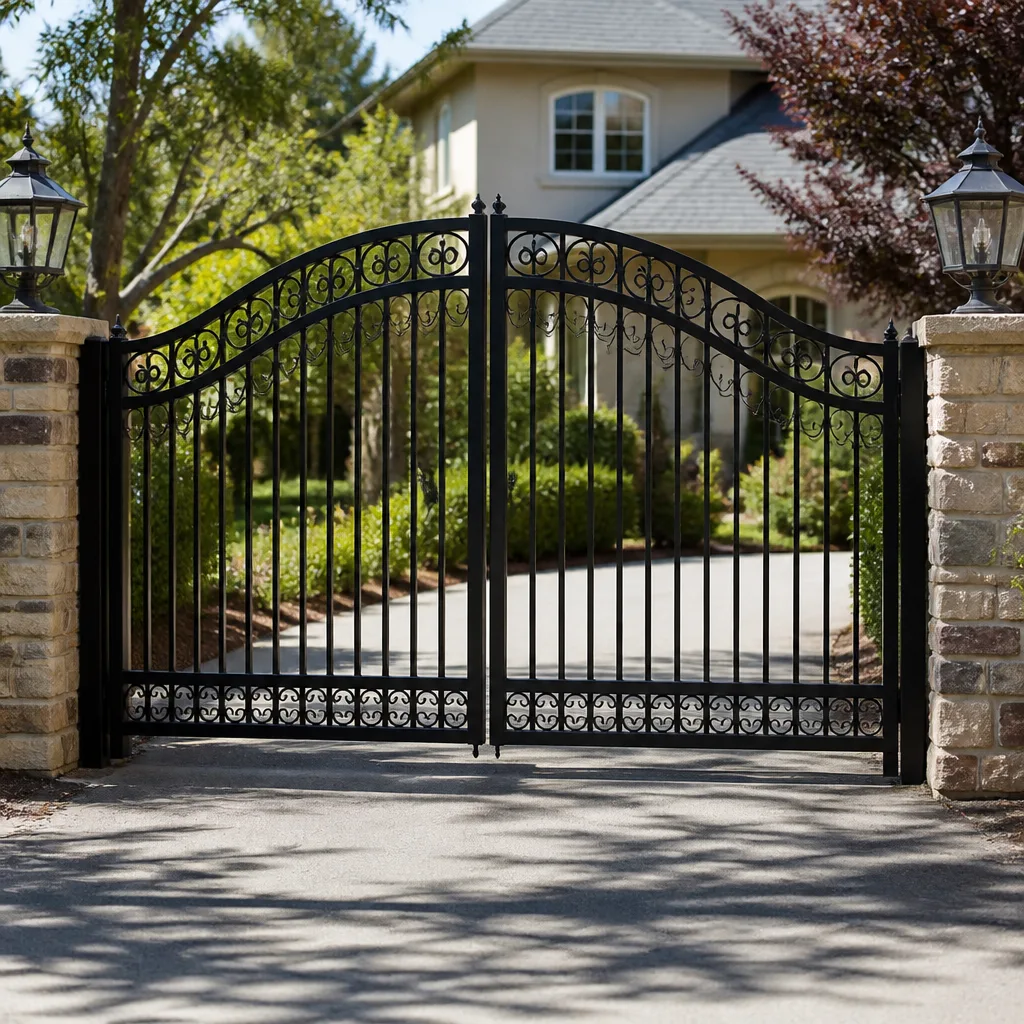 Wrought iron
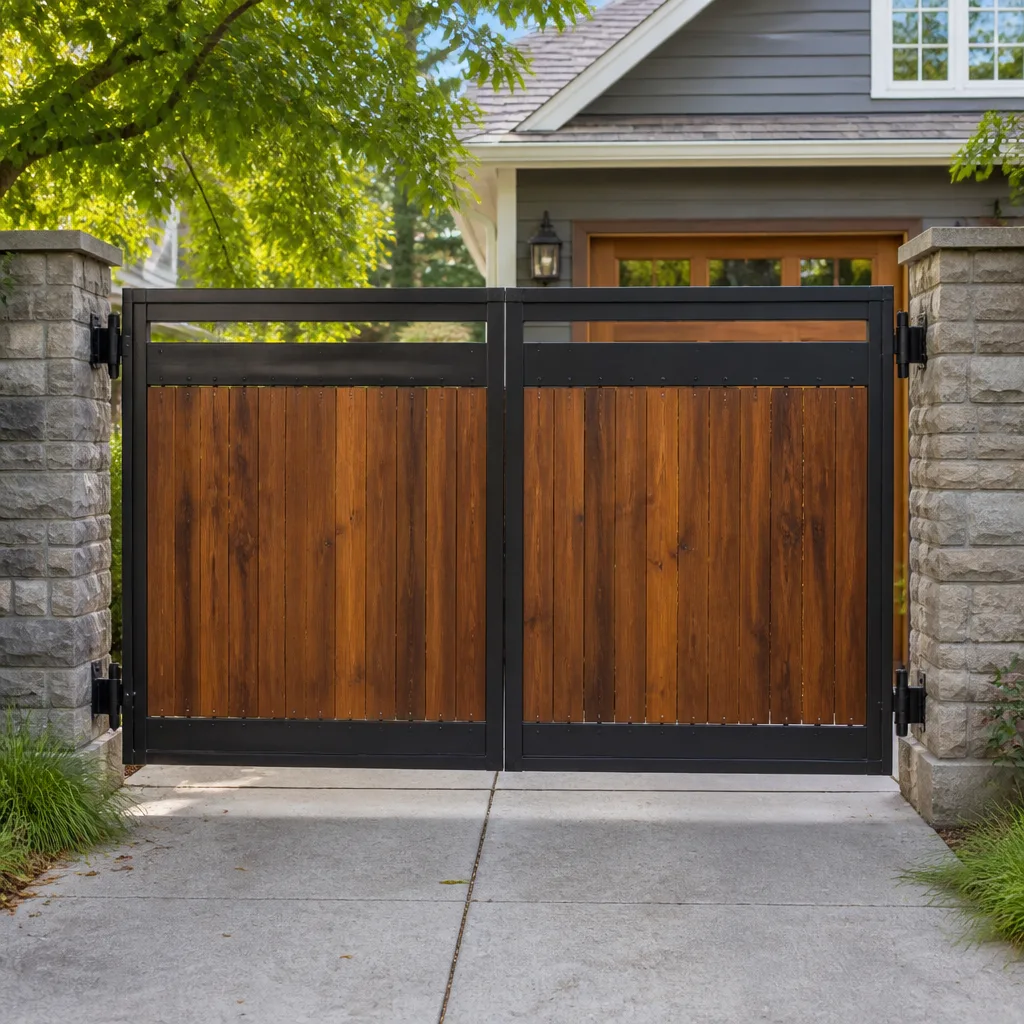 Wood & steel frame
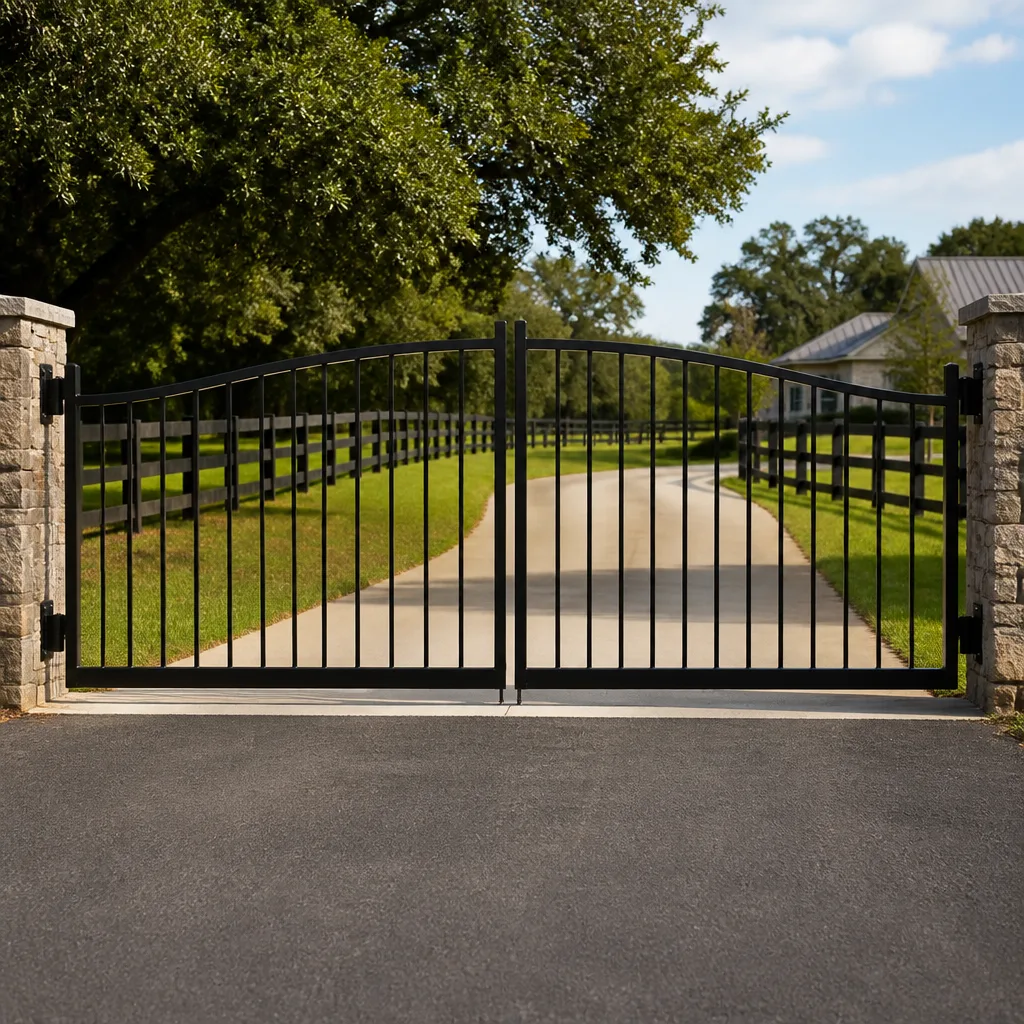 Farm & ranch
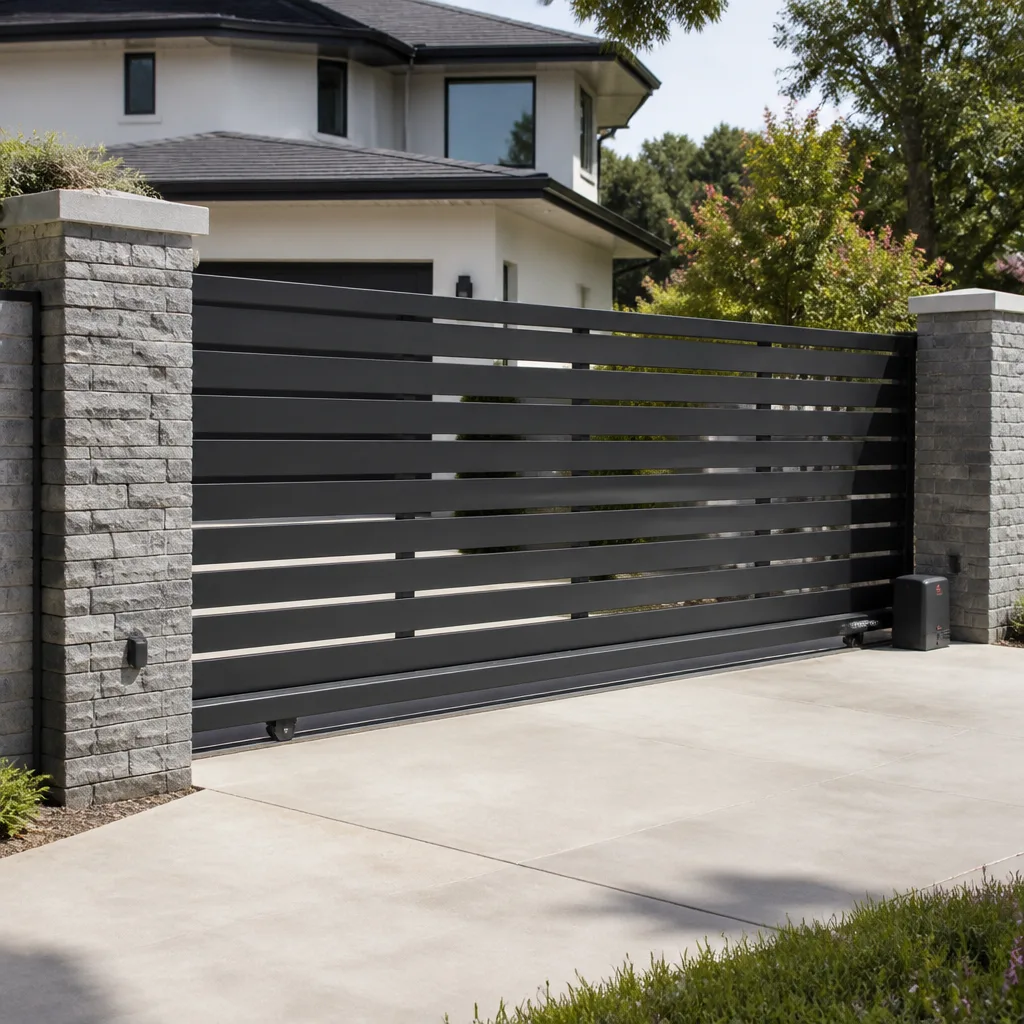 Sliding driveway gates
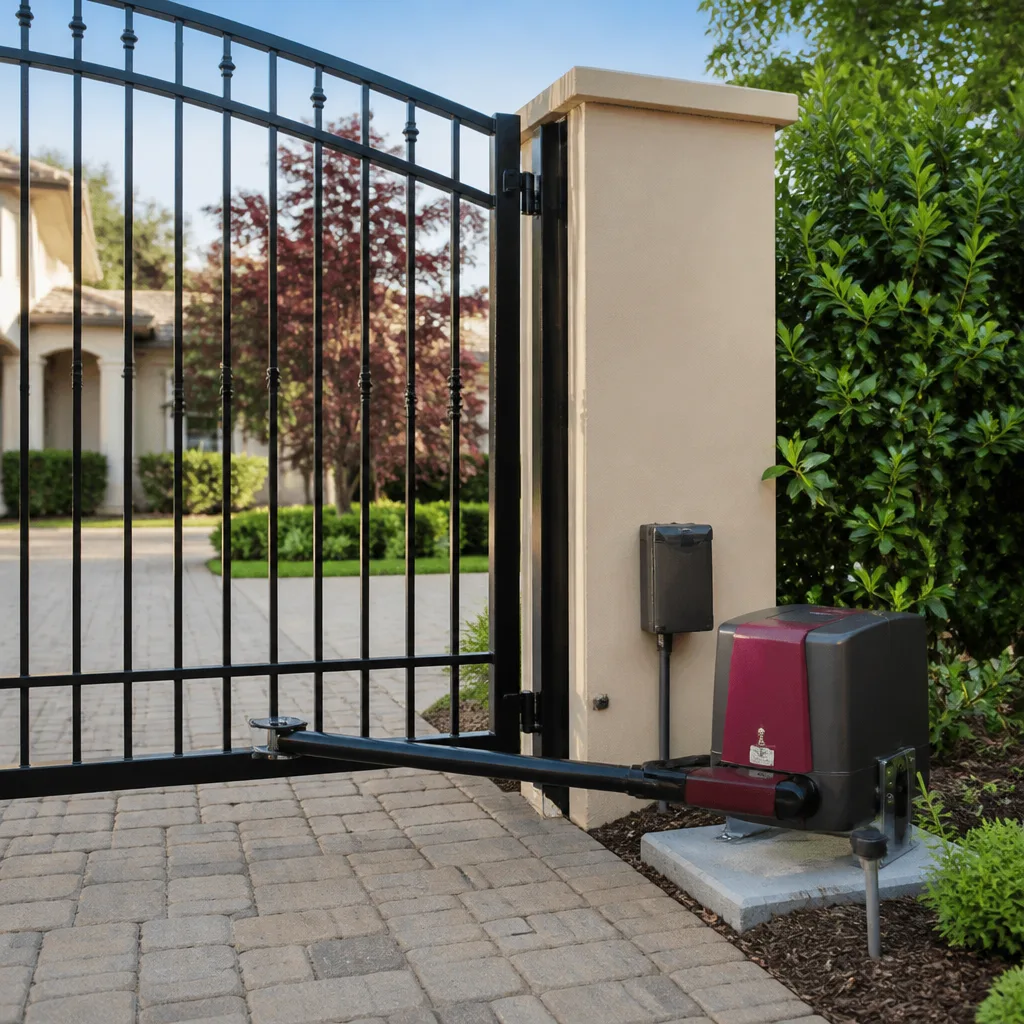 LiftMaster operators
Free on-site gate assessment - hinges, posts, and your LiftMaster or Nice gate operator checked before anything is quoted
The assessment is free and the quote is the invoice.
Get your free estimateGate Repair Maintenance Checklist for Anaheim Homeowners
Hard water from Anaheim’s municipal supply leaves mineral deposits on gate rollers and hinges that act like slow-motion sandpaper. It’s one of the most common causes of premature gate wear we see, and it almost never appears on a generic maintenance checklist. This guide is built around the environmental conditions that actually affect gates in Anaheim: intense UV exposure, Santa Ana wind events, and irrigation runoff that coats moving parts in calcium. You’ll learn what to check monthly, quarterly, and annually, how long each task takes, and what to photograph so a technician can diagnose problems faster. For related reading, see our Gate Repair Troubleshooting: Common Problems and How to Fix Them. We’ve structured it so you can hand this to a property manager or keep it in the glove box of the truck.
Quick Answer
A gate maintenance checklist for Anaheim homeowners should account for three local stressors: hard water mineral buildup on rollers and hinges, UV damage to wiring insulation and powder coating, and Santa Ana wind debris in rail tracks. Monthly checks take 15 minutes and cover track clearing, visual wiring inspection, and listening for motor strain. Quarterly checks add lubrication (with a heat-stable product), sensor alignment verification, and photo documentation. Annual checks should include a full operator test, post plumb check, and a professional inspection of the gate arm attachment point.
Styles & brands we work with
Table of Contents
- The 15-Minute Monthly Gate Check for Anaheim Homeowners
- Quarterly Lubrication and Cleaning: What to Use in Anaheim’s Heat
- The Annual Gate Inspection: A Full Hour That Prevents Thousand-Dollar Failures
- Post-Santa Ana Wind Checklist: What the Wind Leaves Behind
- UV Damage and Hard Water: The Two Anaheim Killers Nobody Warns About
- What to Photograph and Document During Every Maintenance Pass
- Common Mistakes to Avoid
- When to Call a Professional
The 15-Minute Monthly Gate Check for Anaheim Homeowners
Most gate failures give you warning signs weeks before the system actually quits. The problem is nobody’s looking. A monthly walkaround takes 15 minutes and catches about 70% of the issues that turn into expensive repairs. Set a phone reminder for the first Saturday of the month. Here’s the exact sequence we recommend, in order.
- Clear the track (3 minutes). Use a leaf blower or stiff brush to clear debris from the rail. In Anaheim, palm fronds and eucalyptus bark are the usual offenders. If you have a sliding gate, pay attention to the inside of the track where debris packs into corners.
- Listen to the motor (2 minutes). Run the gate through one full open-close cycle. A healthy operator hums. A struggling one whines, clicks, or sounds like it’s working harder than it should. If you’re running a Linear or Viking operator, you’ll notice a distinct change in pitch when the capacitor starts failing.
- Check the rollers and wheels (2 minutes). Look for flat spots, wobble, or visible mineral crust. Hard water deposits from Anaheim irrigation systems build up fastest at the bottom of the roller bracket. Scrape off what you can with a wire brush.
- Inspect wiring for sun damage (3 minutes). Run your eyes along every exposed wire. Anaheim sun degrades PVC insulation faster than most people expect. Look for cracking, discoloration, or bare copper.
- Test the safety sensors (3 minutes). Wave your hand in front of the photo eye while the gate is closing. It should reverse immediately. If it doesn’t, that’s a same-week fix, not a next-month fix.
- Check the gate arm attachment point (2 minutes). Look at the bolts and bracket where the operator arm connects to the gate leaf. Loose bolts here cause the arm to work at an angle, which wears out the gearbox prematurely.
That’s the whole monthly pass. Fifteen minutes, six checks. If you do nothing else in this guide, do this.
Quarterly Lubrication and Cleaning: What to Use in Anaheim’s Heat
Lubrication in Anaheim isn’t the same as lubrication in Seattle or Chicago. The products that work fine in moderate climates fail here for two reasons. First, summer surface temperatures on a black wrought-iron gate can hit 160°F, which liquefies lightweight oils and causes them to drip off or evaporate. Second, the same heat accelerates oxidation, so you need a product with real staying power. Here’s what we recommend for each gate type, and what to avoid.
For Sliding Gates
- Rail and rollers: Use a dry PTFE spray or a silicone-based lubricant. Apply directly to the rail surface and each roller bearing. Avoid WD-40, which attracts dust and breaks down quickly in heat.
- Chain drives: Use a heavy-duty chain lube designed for open environments. Apply a thin coat, then wipe off excess with a rag. Excess lube picks up sand and turns into grinding paste.
- Track guides: Clean with a degreaser first, then apply a thin layer of white lithium grease. In Anaheim, dust from the Santa Ana winds mixes with grease and forms a gritty sludge, so less is more.
For Swing Gates
- Hinge pins: Use a penetrating oil first to break up any existing rust or mineral scale, then follow with a heavy-duty bearing grease. Water from sprinkler overspray is the biggest threat to swing gate hinges in Anaheim. The calcium in that water creates a crust that grinds against the pin every time the gate moves.
- Operator arm joints: Use a light machine oil on pivot joints. These points have tight tolerances. Heavy grease causes binding.
For Overhead and Cantilever Gates
- Counterweight pulleys: Use a dry lubricant. Wet lubricants drip and stain concrete.
- Trolley wheels: Check for wear first. If the wheel surface is flat or pitted, lubrication won’t fix it. That’s a replacement item, and it’s cheaper to swap it before it damages the track.
One more thing: always degrease before you lubricate. Adding new lube on top of old, contaminated lube just seals in the grit. Mineral spirits and a wire brush work fine for most residential gates. If you’re not sure what product to use on a Ghost Controls or DoorKing operator, Gate Repair in Brea details our approach to brand-specific maintenance; the same logic applies across North Orange County.
The Annual Gate Inspection: A Full Hour That Prevents Thousand-Dollar Failures
Once a year, block out an hour for a deeper inspection. This is different from the monthly check because you’re not just looking for obvious problems. You’re looking for wear patterns that predict future failures. Here’s the full sequence we follow when we do annual inspections for Anaheim homeowners.
- Post plumb check (10 minutes). Use a 4-foot level on both sides of each gate post. A post that’s drifted out of plumb by even a quarter inch changes the gate’s travel geometry, which stresses the operator, the hinges, and the latch. Anaheim’s clay-heavy soil expands and contracts with irrigation cycles, which shifts posts over time. If you see more than a half inch of drift, that’s a structural fix before it becomes a gate replacement.
- Weld and bracket inspection (10 minutes). Look at every weld joint, especially on the gate arm attachment bracket. Hairline cracks in powder coating often hide fatigue cracks in the metal underneath. Tap suspect areas with a screwdriver handle. Solid metal rings; cracked metal clicks.
- Full operator test (15 minutes). Run the gate through 10 full cycles. Listen for changes in motor pitch. Feel the operator housing for excessive heat. Check that limit switches stop the gate in the same position every time. Operators like DoorKing and Linear have diagnostic LEDs that flash error codes. Learn what your brand’s codes mean. It saves a service call.
- Safety system verification (10 minutes). Test the photo eyes, the safety edges, and the loop detectors if you have them. This isn’t optional. A gate that doesn’t reverse on contact is a liability. In Anaheim, where many homes have pools and young kids, a malfunctioning safety system is a serious hazard.
- Battery backup and surge protection check (5 minutes). If your operator has a battery backup, test it by cutting power and running the gate. Batteries in Anaheim garages degrade faster from heat exposure. Replace them every two to three years regardless of stated lifespan.
- Latch and lock alignment (5 minutes). Close the gate and check the latch engagement. A latch that’s misaligned by a quarter inch will eventually strip the locking mechanism. Adjust now, before it fails.
- Documentation and photo pass (5 minutes). Photograph everything: operator nameplate, wiring connections, the track condition, any rust or wear you found. Store these photos in a folder on your phone. See the section below on documentation for what to capture.
If any of these steps reveals something you’re not comfortable fixing yourself, that’s the time to call a professional Gate Repair service. Gate systems are under high tension. A spring-loaded swing gate hinge or a sliding gate wheel bearing that fails while you’re working on it can cause serious injury. We’ve seen it. Don’t be the homeowner who turns a $200 repair into a $2,000 medical bill.
Post-Santa Ana Wind Checklist: What the Wind Leaves Behind
Santa Ana winds hit Anaheim every fall, and they’re brutal on gates. The winds carry sand, palm debris, and leaf litter that packs into tracks and grinds against moving parts. Wind gusts also push against gate leaves, stressing the operator arm attachment point and the post foundations. After any sustained Santa Ana event, run this checklist.
- Clear the entire track length (5 minutes). Don’t just clear the visible section. Debris compacts at both ends of the track where the gate stops. Use a shop vacuum if you have one. A leaf blower alone often leaves packed sand in the track corners.
- Inspect the gate arm attachment point (5 minutes). Look for loose bolts, cracked paint around the bracket, or a gap between the bracket and the gate frame. High winds torque this connection. If it’s loose, tighten it now. If the paint is cracked around the bracket, that’s a sign the metal underneath is flexing.
- Check post plumb again (5 minutes). Sustained wind load can shift posts that were marginally stable. Use your level. If a post moved during the Santa Ana event, it will keep moving under normal use.
- Look for wind-driven sand in the operator housing (5 minutes). Santa Ana winds push fine sand through vent holes and around the cover. Sand inside the operator housing accelerates gear wear and clogs limit switches. Use compressed air to blow out the housing. Don’t use a wet cloth; you’ll push grit deeper into the mechanism.
- Run a full cycle test (2 minutes). Listen for grinding, scraping, or a change in motor sound. The gate should travel smoothly and stop in the same position every time.
This checklist also applies after any significant wind event, not just Santa Anas. If Anaheim gets a storm that knocks down tree limbs, run it. The damage from one wind event compounds fast.
UV Damage and Hard Water: The Two Anaheim Killers Nobody Warns About
Generic gate maintenance guides written for a national audience never mention these two factors. They’re the reason we see gates in Anaheim fail earlier than the same equipment in other parts of the country. Here’s what’s happening and what to do about it.
UV Damage to Wiring and Sensors
Southern California sun exposure breaks down PVC wire insulation faster than almost anywhere in the continental US. The UV radiation causes the plasticizer in the PVC to leach out, which makes the insulation brittle. Brittle insulation cracks. Cracked insulation exposes copper. Exposed copper shorts. This is why we see so many intermittent sensor failures and erratic keypad behavior in Anaheim. The wiring looked fine from the outside, but the insulation was cooked.
What to check: every exposed wire run between the operator, the sensors, the keypad, and the gate itself. Look for hairline cracks in the outer jacket, discoloration (white PVC turns yellow or chalky), or any place where the insulation has pulled back from a connector. If you see bare copper, wrap it temporarily with electrical tape, but plan to replace that wire run. A proper replacement uses UV-rated wire, not standard interior wire. It costs slightly more and lasts five times longer.
Safety sensors and loop detector wires are especially vulnerable because they sit at ground level where reflected UV from concrete amplifies the exposure. If your gate’s photo eyes are sun-bleached to a dull yellow, the plastic housings are also degrading. A cracked sensor housing lets moisture in, which causes false triggers and sensor failures. This is a common issue on Gate Installation in Brea projects and across the county line in Anaheim alike.
Hard Water Mineral Buildup
Anaheim’s municipal water is moderately hard, which means it carries dissolved calcium and magnesium. When sprinkler overspray hits a gate hinge or roller, the water evaporates and leaves those minerals behind. Over months, the buildup creates a rough, crusty surface that grinds against moving parts. It’s the equivalent of running your gate bearing in fine sandpaper.
The fixes are straightforward. First, adjust sprinkler heads so they don’t spray the gate. This is the single highest-impact change you can make. Second, clean mineral crust off rollers, hinges, and tracks with a wire brush or a product like CLR. Third, apply a protective lubricant after cleaning. The lubricant creates a barrier that slows mineral adhesion. You’ll still need to clean quarterly, but the buildup will be manageable instead of destructive.
If you’re running a Viking or Ghost Controls operator with an exposed chain, hard water accelerates chain stretch. The calcium acts as an abrasive between the chain links and the sprocket teeth. Check chain tension every quarter. A chain that’s too loose jumps teeth; a chain that’s too tight wears out the motor bearings. The right tension allows about a half inch of vertical movement at the midpoint of the chain run.
What to Photograph and Document During Every Maintenance Pass
Here’s a habit that saves money and time: photograph your gate during every maintenance check. When a technician arrives, they’re looking at a gate with years of wear and no history. Your photos give them that history. They can see how a crack has grown, how a post has drifted, how a roller has worn. That means faster diagnosis and a more accurate quote. Here’s what to capture.
The Photo Pass
- Operator nameplate. The model number, serial number, and brand. This tells the technician exactly what they’re working with before they arrive. We know DoorKing, Linear, Viking, Ghost Controls, FAAC, BFT, LiftMaster, Mighty Mule, and Elite systems. Seeing your plate lets us arrive with the right parts on the truck.
- Full gate in open and closed position. This shows travel range, track condition, and any sag or misalignment. Take these from the same angle every time so you can compare between passes.
- Track and rollers close-up. Photograph the areas that collect debris and mineral buildup. If you see wear, photograph it from two angles.
- Wiring connections. Exposed wires at the operator, sensors, and keypad. If insulation is cracking, document where.
- Gate arm attachment point. Bolts, bracket, and surrounding paint. If the paint is cracking, that tells a story about structural flex.
- Any rust, cracks, or damage you found. Use a coin or a key in the photo for scale. A crack that’s a quarter inch long versus four inches long changes the recommendation from “monitor” to “replace.”
Store these in a dedicated album on your phone or in a shared drive if multiple people maintain the property. When you call us, you can send the photos before the visit. It changes the entire conversation.
Common Mistakes to Avoid
- Using WD-40 as a lubricant. WD-40 is a water displacer and solvent, not a long-term lubricant. In Anaheim’s heat, it evaporates within days and leaves a residue that attracts dust. On gate rollers, it actually accelerates wear by removing the existing lubrication without replacing it.
- Ignoring sprinkler overspray. This is the most preventable cause of gate hinge and roller failure in Anaheim. Adjusting sprinkler heads takes 10 minutes and adds years to your gate hardware. The calcium in municipal water is destructive enough; don’t spray it directly on your gate.
- Lubricating without cleaning first. Adding fresh lubricant on top of mineral scale and old grease doesn’t help. It seals the grit against the metal. Always degrease first.
- Skipping the safety sensor test. A gate that doesn’t reverse on contact is a serious liability, especially in Anaheim neighborhoods with kids and pools. This test takes three minutes. Do it monthly without exception.
- Tightening the gate chain too much. An over-tightened chain on a Linear or Ghost Controls operator puts constant lateral load on the motor shaft bearing. The bearing fails, the shaft wobbles, and the gear strips. That’s a $400-$900 repair from a $0 adjustment.
- Ignoring small cracks in posts or weld points. A hairline crack in a gate post or weld doesn’t stay hairline. The vibration from daily operation flexes it, and the crack propagates. Document it monthly. If it’s growing, replace the component before it fails under load.
- Not documenting anything. If you can’t show a technician photos from past maintenance checks, they’re diagnosing blind. A photo history cuts diagnostic time in half and prevents misdiagnosis.
When to Call a Professional
Most monthly maintenance is DIY-friendly. But some things are worth paying for. Call a professional if the gate post has drifted out of plumb by more than half an inch, if you find cracks in weld joints or the gate arm bracket, if the operator makes grinding sounds or trips the breaker, or if the safety sensors fail the wave test. Don’t attempt to tension or replace a gate spring yourself. Swing gate springs and sliding gate tensioners are under extreme load. A spring that releases while you’re working on it can break bone. The same goes for any electrical work beyond a simple sensor cleaning. Gate operators run on 120V or 240V. If you’re not sure, don’t open the housing. Electric gate repair is our core service for a reason: it’s specialized work that requires brand-specific knowledge and the right diagnostic tools. Ironcrest Gate Repair offers free estimates in Anaheim. Call (833) 589-7839 and we’ll tell you whether it’s a repair or a replacement, without the sales pitch.
See the difference
 Before
 After
 Before
 After
 Before
 After
Frequently Asked Questions
Run a 15-minute monthly visual check and clear the track after wind events. Do a deeper quarterly lubrication pass and an annual full inspection that includes post plumb, operator cycling, and safety system tests. Anaheim’s UV exposure and hard water accelerate wear, so the schedule is more important here than in milder climates. If you skip maintenance, expect to replace rollers, hinges, and eventually the operator two to three years earlier than the equipment’s rated lifespan. Call (833) 589-7839 if you want us to set up a maintenance schedule for your specific gate brand.
Use dry PTFE or silicone-based lubricants on rails and rollers; they stay stable in the 160°F surface temperatures common on Anaheim gate iron in summer. For chain drives, use a heavy-duty open-environment chain lube applied thin. For hinge pins, penetrating oil first to break up rust and mineral scale, then a heavy bearing grease for long-term load. Avoid WD-40 and lightweight oils, both of which break down in heat and attract dust from Santa Ana winds.
If the squeak comes back within days, the lubrication isn’t the problem. The underlying issue is usually mineral scale from hard water, a worn roller bearing, or a hinge pin that’s already pitted from corrosion. Clean the affected area with a degreaser and wire brush, inspect for flat spots or pitting, then lubricate. If the squeak persists, the bearing or pin needs replacement. We diagnose this regularly in Anaheim, and the fix is usually a specific part replacement rather than more lubricant. Call (833) 589-7839 for a free diagnosis.
After any strong wind event, clear the full track length of debris, check the gate arm attachment point for loose bolts or cracked paint, verify the gate posts are still plumb, blow out the operator housing to remove wind-driven sand, and run a full gate cycle listening for grinding. This takes about 20 minutes. Wind-driven sand is especially damaging to operator internals. If you hear grinding after a wind event, don’t run the gate until the housing is cleaned out. The sand acts as an abrasive on gears and limit switches.
A residential gate operator in Anaheim typically lasts 8 to 12 years with proper maintenance, compared to 12 to 15 years in milder climates. The difference comes down to UV degradation of wiring and housing plastics, heat stress on capacitors and circuit boards, and mineral buildup from hard water on moving parts. Operators installed without regular maintenance often fail at the 5 to 7 year mark. Brand matters too: commercial-grade operators like FAAC, BFT, and DoorKing are built for higher cycle counts and generally outlast entry-level residential units. If your operator is nearing the end of its lifespan, we can tell you whether a repair extends it or a replacement makes more financial sense. Call (833) 589-7839.
Monthly visual checks and track clearing are safe DIY tasks. Quarterly lubrication and cleaning are also DIY-friendly if you use the right products. Annual inspections that involve post plumb checks and operator diagnostics are the line where a professional makes sense. Never attempt to adjust or replace gate springs, tensioners, or any component under load. Never open an operator housing if you’re not sure how to disconnect power first. If a maintenance task makes you uncomfortable, gate installation and repair professionals can handle it safely. Free estimates at (833) 589-7839.
The Bottom Line
Anaheim gates fail from the same three local stressors every year: UV exposure cooking the wiring, hard water grinding the moving parts, and Santa Ana winds packing debris into every open space. A maintenance schedule built around those three factors will add years to your gate system and prevent most surprise breakdowns. Do the 15-minute monthly pass without fail. Do the quarterly lubrication with heat-stable products. Do the annual inspection with documented photos. When something is beyond your comfort level, call a specialist who knows your brand. Ironcrest Gate Repair home is your starting point for any gate question in Anaheim. Call (833) 589-7839 for a free estimate and an honest answer about whether that worn part is a repair or a replacement.
Written by the team at Ironcrest Gate Repair, serving Anaheim since 2017. For more guides & resources, visit our blog.