
Last updated October 31, 2026
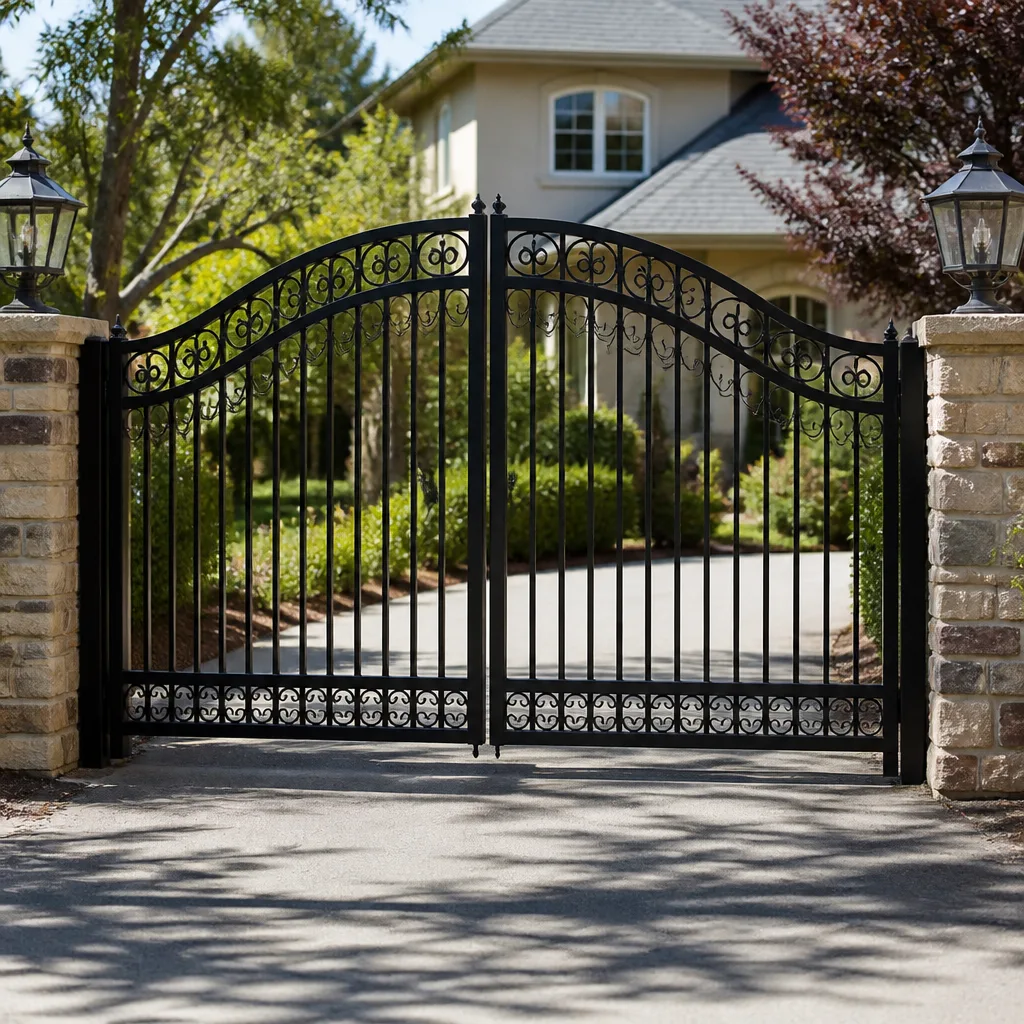 Wrought iron
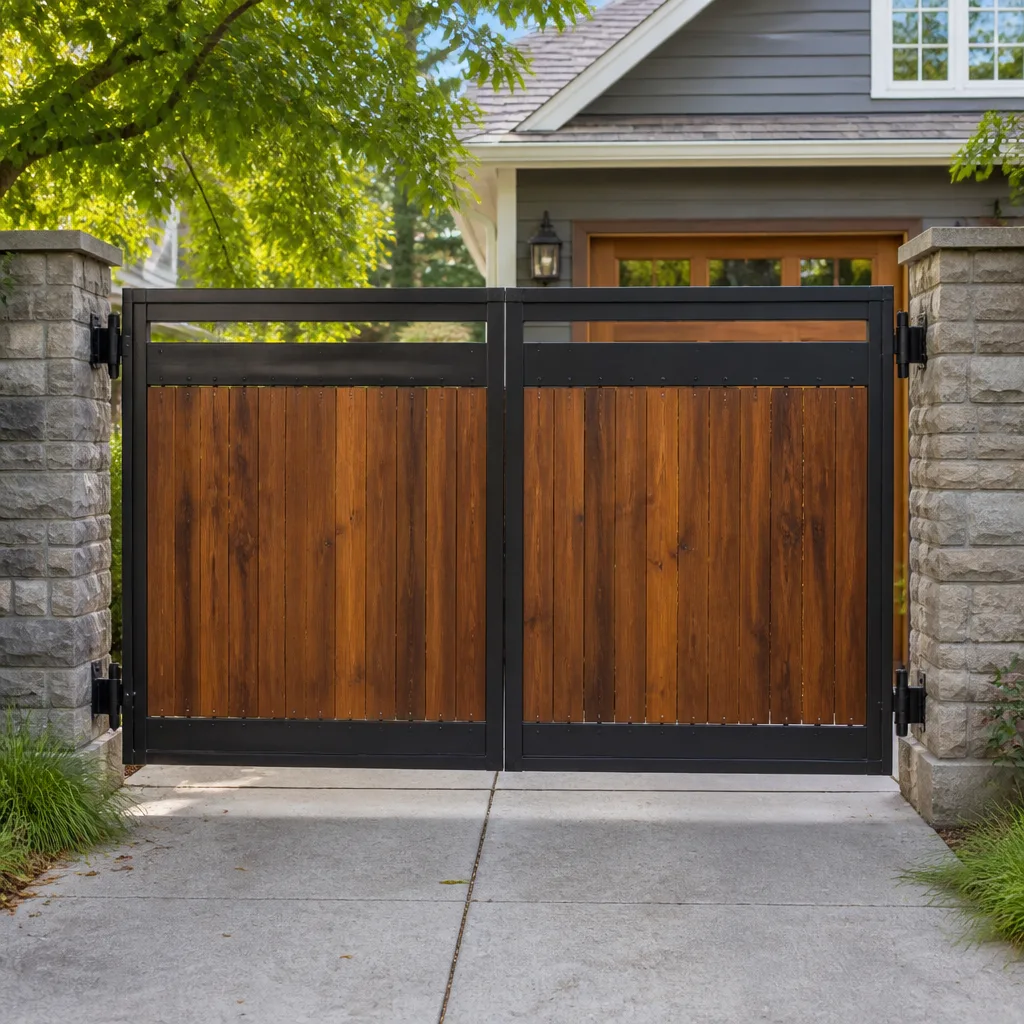 Wood & steel frame
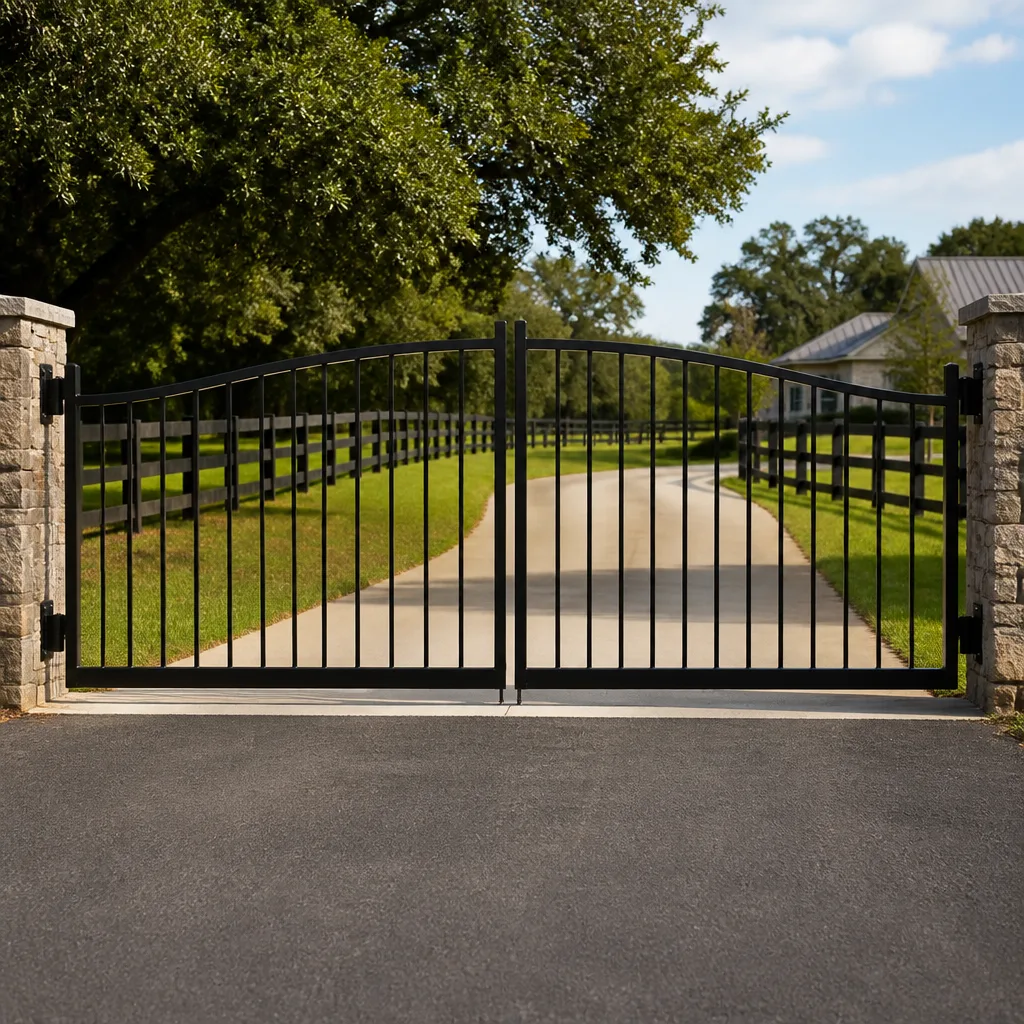 Farm & ranch
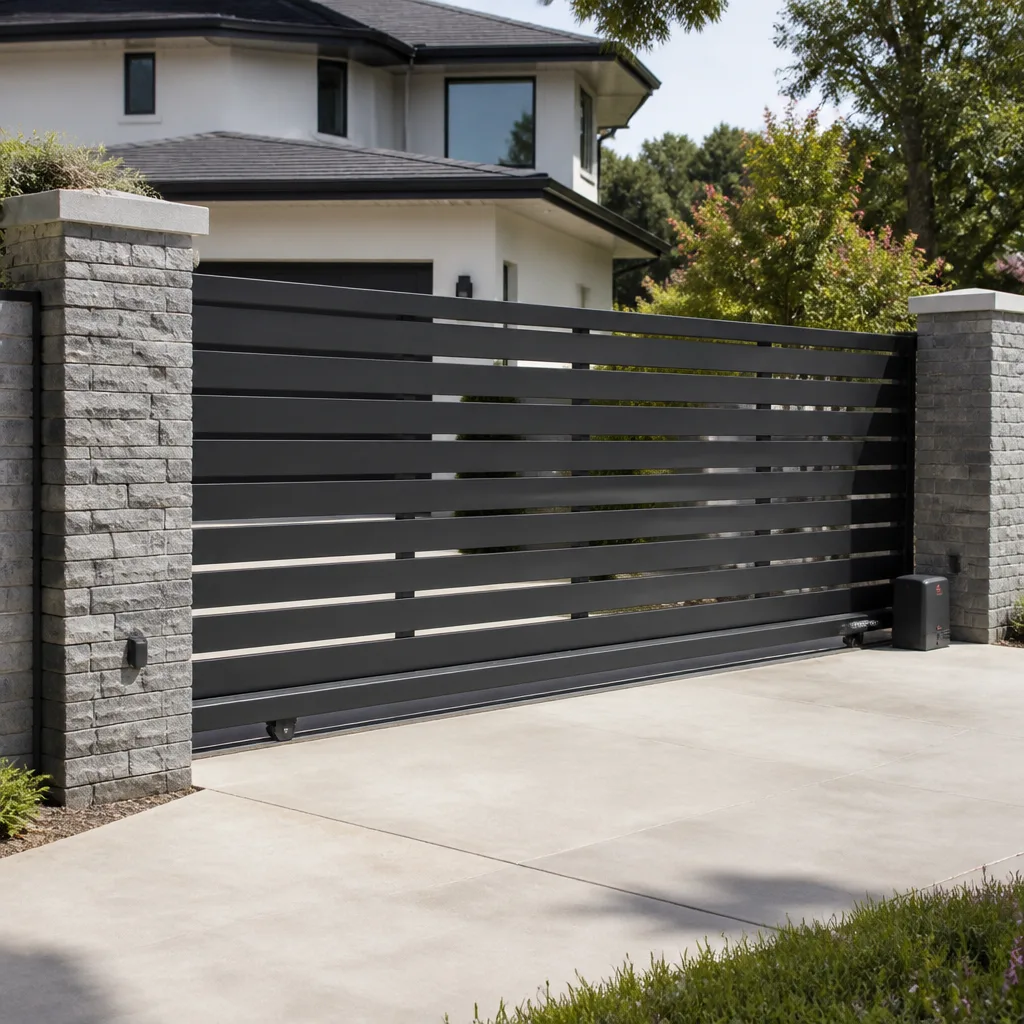 Sliding driveway gates
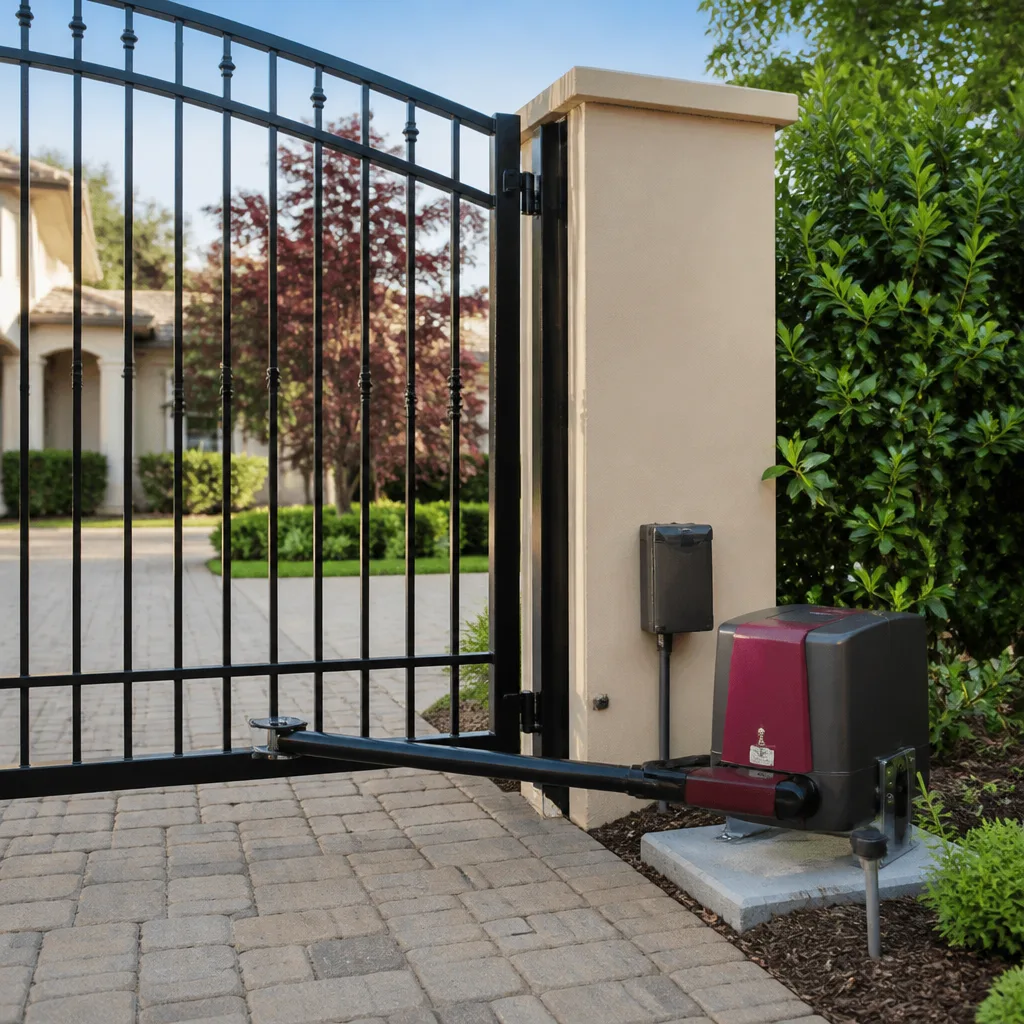 LiftMaster operators
Free on-site gate assessment - hinges, posts, and your LiftMaster or Nice gate operator checked before anything is quoted
The assessment is free and the quote is the invoice.
Get your free estimateGate Repair Permits, Codes & Inspections in CA: What You Need to Know
Most people never think about permits until a problem lands on their desk. A gate motor swap is typically permit-free. Adding a new electrical circuit to power that motor is not – and Anaheim’s building department treats the distinction seriously, especially when a home goes to escrow. This guide draws the exact line between what requires a permit and what doesn’t, covers UL 325 safety standards for automated operators, explains the HOA layer that sits on top of city code in many Anaheim communities, and walks through what happens when unpermitted gate electrical work surfaces in a home inspection.
Quick Answer
In Anaheim, mechanical gate repairs such as hinge replacement, wheel and track work, or swapping a like-for-like gate operator are generally permit-free. A permit is required when the job involves new electrical circuits, structural post replacement, or a gate exceeding 6 feet in height in certain zoning situations. Unpermitted electrical work can surface during a home sale and block escrow or trigger insurance claim denials, so the trigger points matter.
Styles & brands we work with
Table of Contents
- The Trigger Points: When a Gate Repair Needs a Permit in Anaheim
- Electrical Work on Gate Operators: The Real Permit Line
- Structural Modifications: Posts, Footings, and Height
- UL 325 and Automated Gate Safety: Code You Can’t See
- The HOA Overlay: CC&Rs on Top of City Code
- What Happens at Home Sale When Gate Work Was Never Permitted
- How to Pull a Permit Correctly for Gate Electrical Work in Anaheim
- Verifying Your Contractor Is Handling Permits: What to Ask
The Trigger Points: When a Gate Repair Needs a Permit in Anaheim
The City of Anaheim follows the California Building Code (CBC), the California Electrical Code (CEC), and the California Residential Code (CRC), each adopted with local amendments. For gate work specifically, three conditions move you from “no permit needed” into “permit required” territory:
- New electrical circuits. Running a new branch circuit from your panel to power a gate operator is electrical work. Anaheim requires a permit for that, no exceptions for residential convenience.
- Structural post or footing replacement. Removing and resetting a gate support post, pouring a new concrete footing, or changing the structural load path of the gate assembly falls under building permit requirements.
- Gate height over 6 feet. In many Anaheim zoning districts, a gate or fence over 6 feet requires planning review and a building permit. This applies even if the gate is replacing an existing one like-for-like, depending on the zone and any nonconforming status on the property.
What stays permit-free? Replacing hinges, rollers, wheels, track sections, or gate hardware on an existing structure. Replacing a gate operator with a like-for-like model that plugs into an existing, permitted outlet is also typically exempt, though we recommend checking the manufacturer’s installation manual for any hardwiring requirement. In our experience across Anaheim, the most common surprise is the new circuit: homeowners assume a motor swap covers the whole job, but the electrician’s portion changes the calculus.
If you’re unsure where your project falls, the City of Anaheim’s Building Division can provide a scope review. We also walk clients through this on every Gate Repair in Brea call, because the trigger points in Anaheim and Brea follow the same state-adopted code structure with only minor local variation.
Electrical Work on Gate Operators: The Real Permit Line
The cleanest way to think about it: if the wiring already exists and is code-compliant, a motor or board replacement usually needs no permit. If new wire is pulled, a new circuit is added, or the panel gets a new breaker, the City of Anaheim expects an electrical permit.
Here’s the line-by-line breakdown:
- Like-for-like operator swap on an existing outlet: No permit. This is a repair action, not an alteration to the electrical system.
- New hardwired operator where only low-voltage existed: Permit required. Pulling 120V line voltage is new electrical work.
- Adding a dedicated circuit for a gate operator: Permit required. This is panel work, and the National Electrical Code (NEC) requires a dedicated branch circuit for most gate operator installations.
- Upgrading a plug-in operator to a hardwired commercial model: Permit required. The circuit load, grounding, and disconnect requirements change.
- Replacing damaged wiring or conduit within the existing footprint: Generally no permit, unless the work extends the circuit or moves the tap point.
Anaheim’s permit counter treats gate operator circuits no differently than any other dwelling electrical work. The inspection covers wire gauge, conduit type, grounding, GFCI protection where required, and proper disconnects. For commercial gate systems, the requirements scale: a DoorKing or Viking commercial operator typically demands a dedicated circuit, a lockable disconnect within sight of the motor, and often a separate permit for access control wiring.
If your repair involves any of this, don’t have the work done unpermitted. The cost savings are small compared to what a future escrow inspection can cost you. This is exactly the kind of thing we flag during Electric Gate Repair in Brea estimates, since many Brea and Anaheim homes were built with older wiring that predates current gate operator circuit requirements.
Structural Modifications: Posts, Footings, and Height
Mechanical repairs address moving parts. Structural work addresses the column, post, footing, or foundation that carries the gate’s full weight. The moment you’re pouring concrete, cutting out a rusted post base, or replacing a post that carries a cantilevered slide gate, Anaheim’s Building Division considers it construction, not repair.
Here’s what that means in practical terms:
- Replacing a swing gate post. This requires a building permit when the post is embedded in concrete and carries the gate’s load. The new footing must meet current code depth, diameter, and anchor bolt requirements, which can differ from what was installed 30 years ago.
- Converting a single gate to a double gate. If the conversion changes the structural layout, including adding a second post, it’s permit territory.
- Adding a pedestrian gate alongside a vehicle gate. This can alter setback, egress, and fire access, all of which trigger plan review in Anaheim.
- Raising gate height. Bringing a 5-foot gate to 7 feet is an alteration. Depending on your zone, a 7-foot gate may not even be permitted by right, which is why the height trigger exists.
The 6-foot height threshold deserves extra attention. Anaheim, like most Orange County cities, uses 6 feet as the standard maximum for fences and gates in residential districts fronting or flanking streets. Some interior side and rear yard lines allow up to 8 feet. Corner lots get strict: sight distance triangles at intersections can lower the allowable height or require open-picket construction, so a solid 6-foot gate that’s fine mid-block may not be approvable at a corner.
We see a lot of Anaheim homes with gates that were installed decades ago and are now nonconforming. If a nonconforming gate is damaged, a strict reading of the code can require the replacement to conform, which means it may need to be shorter, set back differently, or built from different materials. That’s a conversation to have before you buy the gate, not after it’s delivered. This is why we always assess the structural scope during any Gate Installation in Brea consultation, even when it looks like a straightforward swap.
UL 325 and Automated Gate Safety: Code You Can’t See
UL 325 is the safety standard that governs automated gate operators in the United States. It’s not a city permit issue per se, but California law incorporates its requirements into gate operator installation standards, and a non-compliant installation can create liability far beyond anything a permit inspection covers.
The core of UL 325 for gate operators is this: an automated gate must have a minimum of two independent entrapment protection devices, one of which is either an inherent reversing mechanism (the motor senses resistance and reverses) or a monitored external device. The second device can be a photoelectric sensor, an edge sensor, or a pressure-sensitive strip. For a residential swing gate on a Ghost Controls or Linear operator, this typically means:
- The operator’s built-in obstruction reversal counts as one device.
- You must add a second device, usually a photocell pair mounted at the gate’s pinch points or travel areas.
What does this mean for a repair? If a technician replaces a control board, the safety inputs must be restored and verified. If a technician installs a new operator, the entrapment protection must meet current UL 325 standards, not the standards that were in place when the original operator was installed. A repair that leaves a gate non-compliant is a liability you carry, even if the city’s permit inspection doesn’t flag it, because UL 325 compliance is a manufacturer, installer, and property owner obligation rolled together.
Compliance matters for insurance too. If a child is injured by a gate that lacks the second entrapment device, the homeowner’s insurance carrier will ask about UL 325 compliance. A “no” answer can affect the claim outcome. This is one reason we treat our Gate Repair services as a core competency, not an add-on: brands like Linear, Viking, Ghost Controls, and DoorKing each have slightly different safety input wiring, and a technician who isn’t fluent in your specific brand can easily leave a second device disconnected without realizing it.
The HOA Overlay: CC&Rs on Top of City Code
Many Anaheim communities, especially planned developments in Anaheim Hills and newer subdivisions, operate under HOAs with Covenants, Conditions & Restrictions (CC&Rs) that add an approval layer on top of City of Anaheim code. The city may not care about gate style, finish, or color. The HOA absolutely will.
Here’s the common scenario: a homeowner replaces a broken gate motor with the same model and never pulls a city permit, because none is needed. But the HOA’s architectural review committee requires written approval for any external modification, and a like-for-like motor swap doesn’t qualify as a modification under most CC&Rs. That’s fine. The problems start with gate replacement, restaining, or changing the gate’s design, hardware, or operator type.
- HOA approval is separate from city permits. You can hold an approved city permit and still be violating your HOA. The two processes don’t talk to each other.
- CC&Rs often regulate gate appearance, not just structure. Style, material, color, and even the type of operator (above-ground vs. below-ground) may be restricted.
- Some Anaheim HOAs require licensed contractors. The CC&Rs may mandate a state-licensed contractor for any gate or fence work, regardless of city permit exemptions.
- Approval timelines vary. Some HOAs take 2-4 weeks for architectural review. If your gate is broken and unsecured, you may need to work with the HOA on an emergency authorization while you sort out the permanent approval.
The consequence of skipping HOA review isn’t a city fine. It’s a compliance hearing, a demand to modify or remove the work, and sometimes daily fines until the violation is cured. If you sell the home, the HOA’s demand letter can surface in the resale package and complicate escrow just as effectively as an unpermitted addition would.
What Happens at Home Sale When Gate Work Was Never Permitted
The most expensive gate permit in Anaheim is the one you never pulled, discovered three days before closing. For Gate Repair Warning Signs: A Anaheim Homeowner’s Reference Guide, here’s what typically unfolds when a home inspection flags unpermitted gate electrical work:
- The inspector notes it. A new circuit, a hardwired operator, a subpanel tap, or a commercial-style gate system that feels out of place for the property. The inspector doesn’t know whether the work was permitted; they flag it and recommend verification.
- The buyer’s agent requests permit history. The City of Anaheim’s permit records can be pulled online. If no permit exists for the electrical work, it becomes a disclosure item.
- Negotiations begin. The buyer may ask for a credit to cover the cost of retroactive permitting plus repairs if the work isn’t code-compliant. In a strong seller’s market, some sellers hold firm. In a balanced market, this becomes a negotiating chip.
- Retroactive permitting happens. Anaheim allows permits to be pulled after the fact, but the work must be inspected and brought to current code. If the original wiring is undersized or the circuit isn’t dedicated, the correction cost can be multiple times the original job.
- Insurance gets pulled into it. If the buyer’s insurer asks about unpermitted electrical work and the answer is yes, the policy may be conditioned on correction. In the worst case, coverage is declined until the permit is closed.
The resolution path is straightforward but not free. An electrical contractor opens the wall, if needed, verifies or upgrades the circuit, and schedules an Anaheim inspection. Once the permit is finalized, the issue is considered cured for sale purposes. The smart move is to handle this before listing, not during escrow, when your leverage is lowest and timelines are compressed.
We’ve walked Anaheim homeowners through this more than once. A $2,200 gate operator install done unpermitted becomes a $5,000+ correction at sale if the circuit fails inspection. The math works against deferring it.
How to Pull a Permit Correctly for Gate Electrical Work in Anaheim
Pulling a permit in Anaheim is not complicated, but it is procedural. The steps for a residential gate operator circuit:
- Determine the permit type. For electrical work, you need an Electrical Permit. For structural post replacement, you need a Building Permit. For a gate over 6 feet or a corner-lot situation, you may need Planning review first. The Building Division counter at Anaheim City Hall can advise which applies.
- Prepare a scope description. Anaheim’s permit application asks for a description of work. “Install dedicated 120V circuit for residential gate operator, per NEC Article 430” is the level of specificity that prevents back-and-forth.
- Submit the application. Many single-trade permits for simple scope work can be issued online through Anaheim’s ePermit portal. Plan review isn’t required for a straightforward circuit addition; the permit can be issued over the counter.
- Pay the fee. Electrical permit fees in Anaheim are based on the valuation of the work. For a typical gate operator circuit, expect a few hundred dollars. The exact fee is set by the City’s fee schedule.
- Schedule the rough inspection, if applicable. If conduit is installed in an open trench or before drywall is closed, the inspector checks wire type, gauge, conduit fill, and grounding at rough-in.
- Schedule the final inspection. The inspector verifies the circuit is dedicated, the disconnect is accessible, the operator is UL 325 compliant with both entrapment devices functioning, and the work matches the permit description.
- Keep the signed permit card. The finaled permit is what you show a buyer or an insurance adjuster. Store it with your home records.
In practice, the electrical contractor handles most of this. If you’re hiring a gate specialist for the mechanical portion and an electrician for the circuit, coordinate the sequencing: the electrician pulls the electrical permit, the gate company handles the operator install and UL 325 safety configuration. Both scopes should be listed on a single job plan so the inspector sees the complete picture.
Verifying Your Contractor Is Handling Permits: What to Ask
Anaheim’s permitting system cannot check itself. The property owner is ultimately responsible for permit compliance, which means the burden of verification falls on you, not on the contractor’s promise. Here’s a practical set of questions to work through before the job starts:
- “Will this job require a permit?” A good contractor answers this specifically, not with “we handle everything.” Ask them to explain the trigger points: electrical, structural, height, or planning.
- “Who is pulling the permit?” Some gate companies have a licensed electrical contractor on staff or a partner electrician. Others will tell you to use your own. Both are fine, as long as someone is clearly named.
- “Can I see the permit number before work starts?” In Anaheim, permits are searchable online. If a contractor can’t produce a permit number, the work hasn’t been permitted.
- “Will you schedule and meet the inspector?” This is a normal part of the job, not an extra. If the contractor seems uncertain about this question, reconsider.
- “What happens if the inspection fails?” The answer should be simple: we fix it, re-inspect, and carry the cost for corrections caused by our work.
When we install gate operators under an electrical permit, we coordinate with the electrician of record and ensure the gate system’s safety devices are fully functional before the inspector arrives. On a Viking or Ghost Controls residential install, that means verifying the entrapment devices are wired, tested, and labeled. On a DoorKing commercial gate, it means confirming the disconnect, the loop detector, and the safety edge circuits all respond correctly. The inspector cares about code; we care that the system functions after the inspector leaves.
Common Mistakes to Avoid
- Assuming “like-for-like” always means no permit. A like-for-like operator swap on an existing outlet is permit-free. A like-for-like operator swap that requires hardwiring is not. The electrical connection, not the brand, is the determining factor.
- Treating HOA approval as a substitute for a city permit. These are separate approvals with separate enforcement. An HOA approval letter doesn’t satisfy Anaheim’s Building Division, and a city permit doesn’t satisfy the HOA.
- Overlooking UL 325 compliance on a repair. Changing a control board or motor can alter safety inputs. The repaired gate still needs two independent entrapment protection devices, verified by someone who understands the brand they’re working on.
- Ignoring the height trigger for replacement gates. In Anaheim, a nonconforming 7-foot gate that’s damaged may not be replaceable at the same height. Replacing it without checking zoning can create an unpermitted structure that then blocks a future sale.
- Deferring a permit to save money now. The retroactive permit cost, when it comes, is always higher than the original permit fee. It includes potential circuit upgrades, inspection fees, and the negotiation discount a buyer will extract.
- Not verifying the contractor’s permit status before paying a deposit. Ask for the permit number. Anaheim’s online system makes verification straightforward. A vague answer on permit status is an answer.
- Skipping the corner-lot sight distance check. Solid gates at corner intersections can block sight lines for drivers. Anaheim enforces sight distance requirements, and non-complying gates are a citable condition, not just a safety concern.
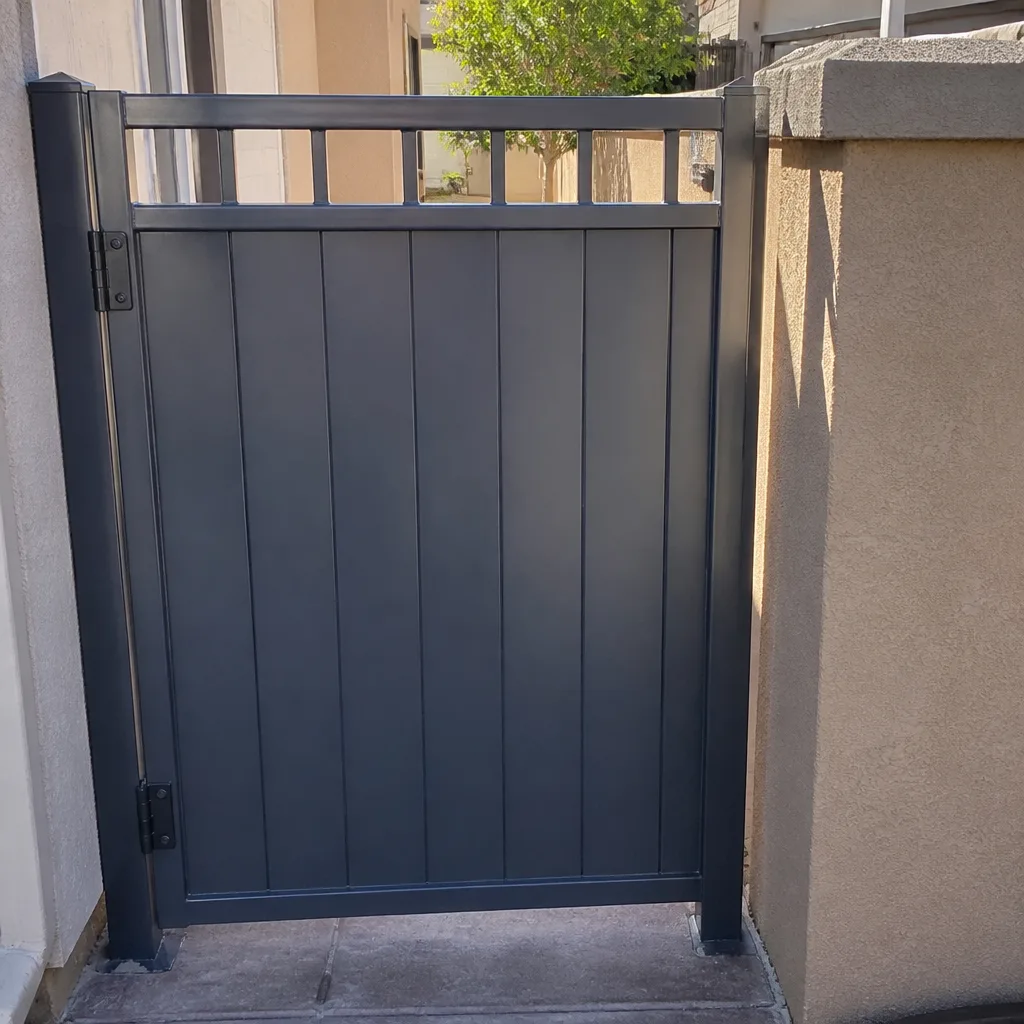
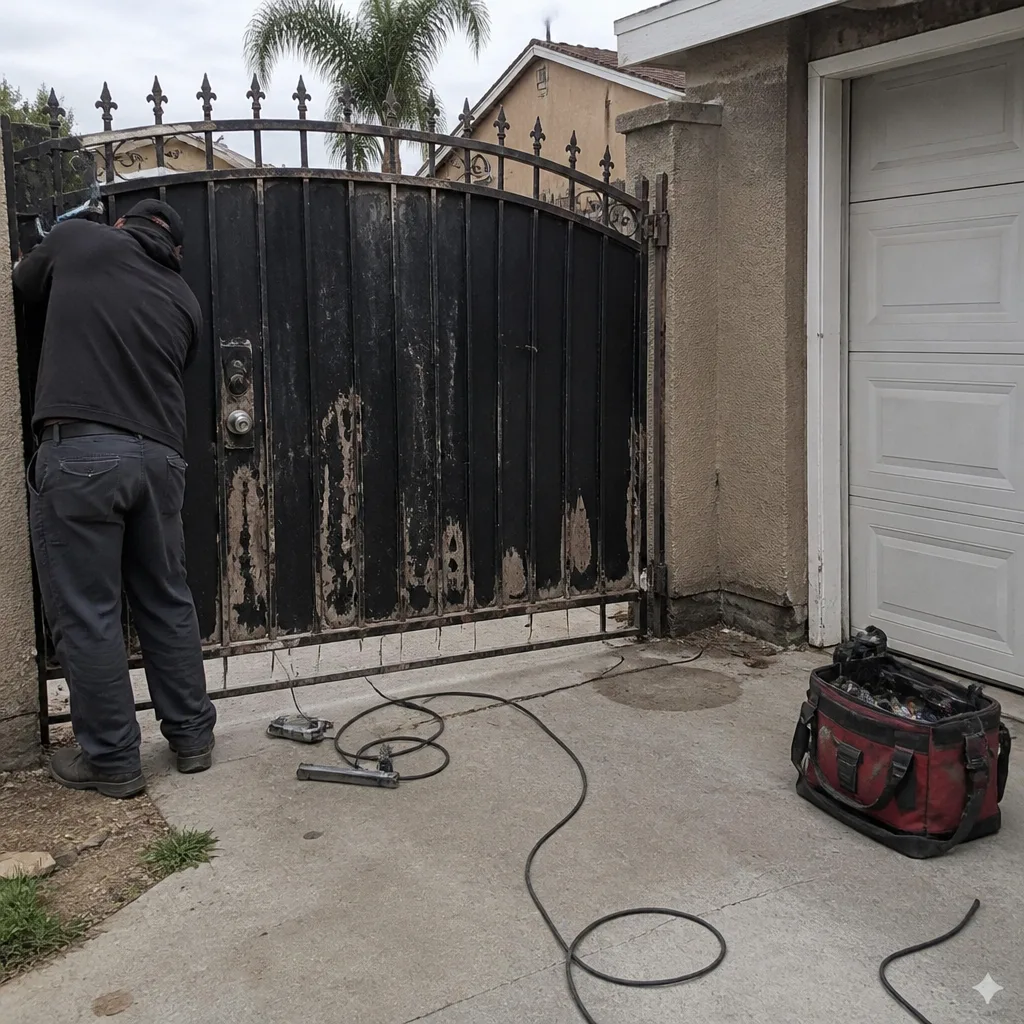
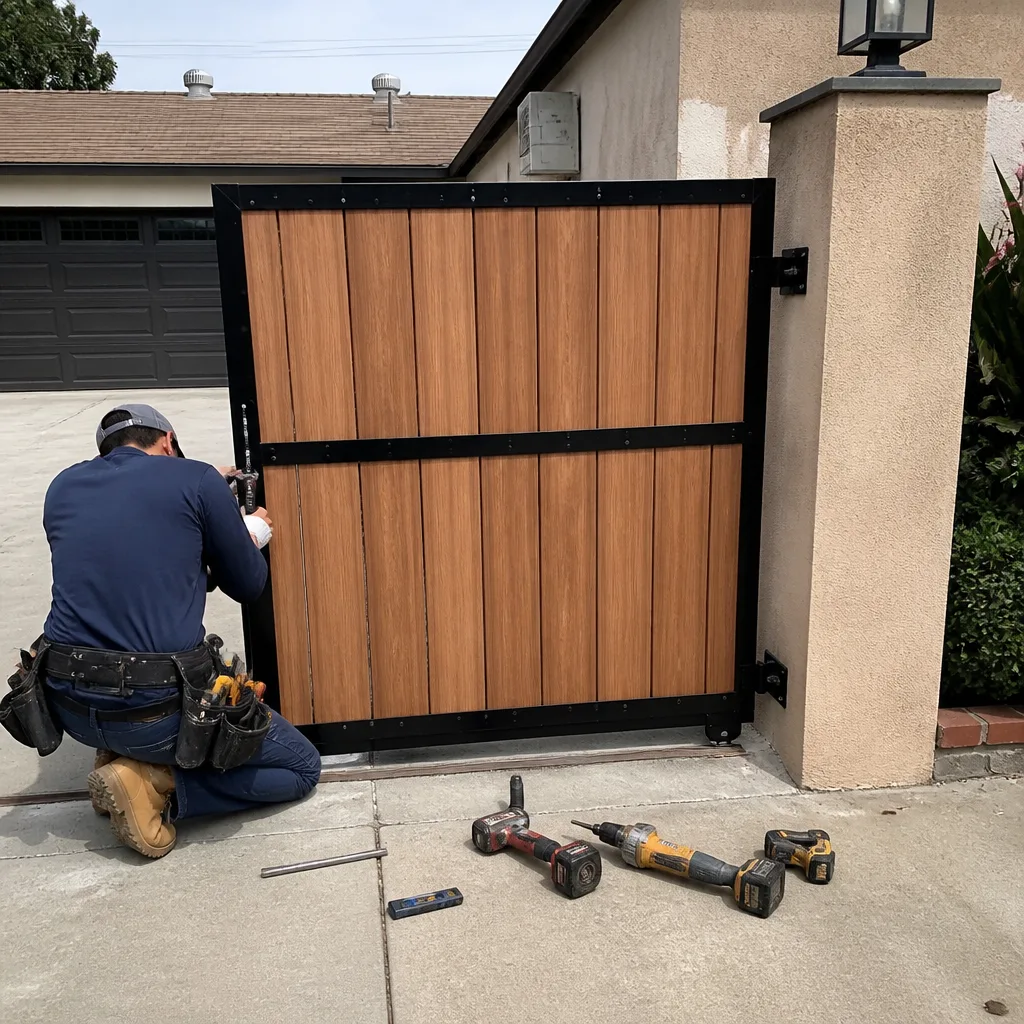
See the difference
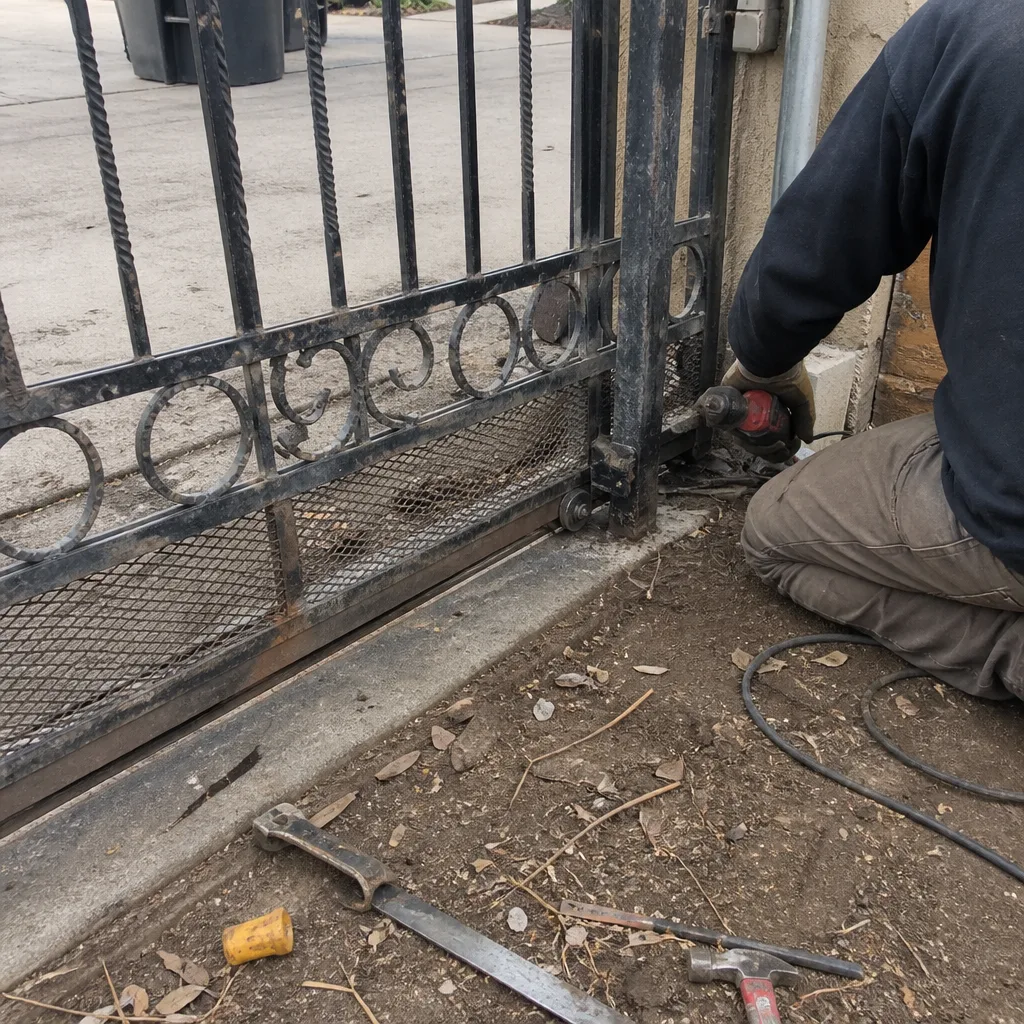 Before
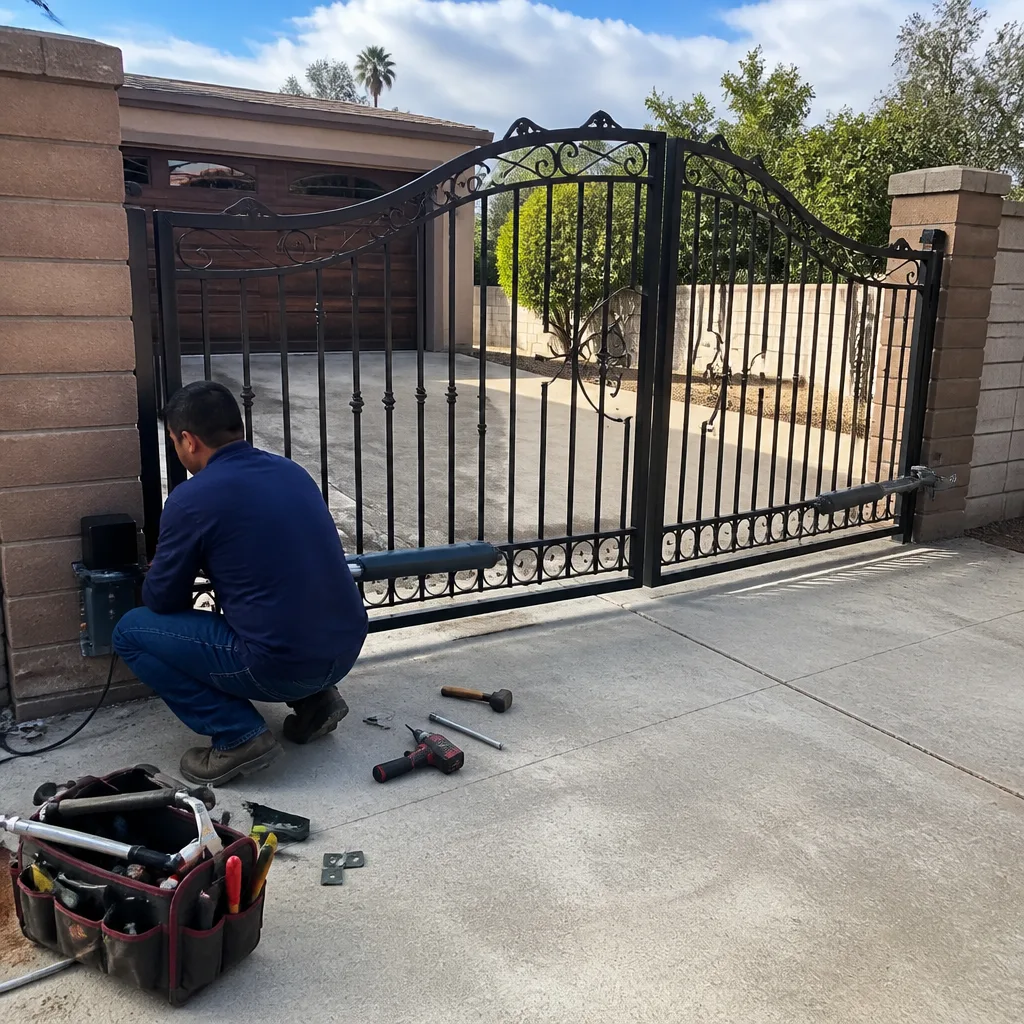 After
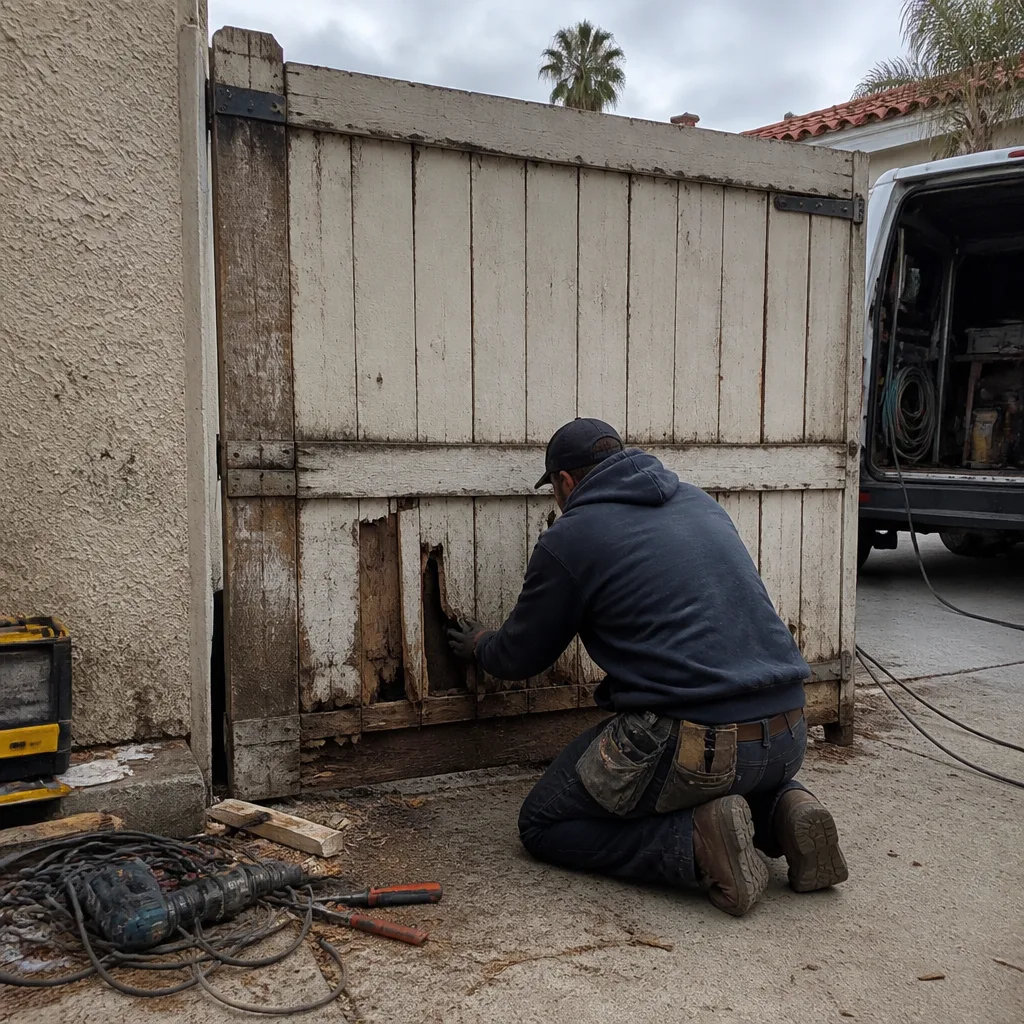 Before
 After
 Before
 After
When to Call a Professional
Call a professional when the gate work touches any permit trigger: new electrical circuits, post or footing replacement, height over 6 feet in a restricted zone, or an operator install that requires UL 325 safety device configuration. Also call when a home sale is on the horizon and you’re unsure whether past gate work was permitted; for Gate Repair Troubleshooting: Common Problems and How to Fix Them, a specialist can assess the system, identify likely unpermitted elements, and recommend the correction path before the listing goes live. Ironcrest Gate Repair offers free estimates in Anaheim – call (833) 589-7839, and we’ll tell you exactly where your project falls on the permit line.
Frequently Asked Questions
No, if you’re replacing the operator with a like-for-like model that connects to an existing, permitted power source. Yes, if the replacement requires new electrical wiring, a new circuit, or hardwiring where plug-in existed before. Call (833) 589-7839 for a free assessment of your specific setup.
Electrical permit fees in Anaheim are based on the valuation of the work, with most residential gate operator circuits falling in the low hundreds of dollars. The exact amount comes from the City’s current fee schedule, and your electrical contractor can provide the figure before work begins.
Yes. Anaheim allows permits to be pulled after the fact. The work must be brought to current code, inspected, and finalized. The correction cost depends on what the inspection finds, which is why retroactive permits often cost more than original permits.
UL 325 is the safety standard for automated gate operators. It requires at least two independent entrapment protection devices on every automated gate. A gate that doesn’t meet UL 325 is a liability issue, even if the city’s inspection never flags it, because the standard is separate from building code enforcement.
Not for most mechanical repairs or like-for-like operator swaps. But gate replacement, restaining, design changes, or operator type changes typically require HOA architectural review under CC&Rs. HOAs in Anaheim Hills and many planned communities enforce this strictly, independent of city permits.
First, verify the permit status through Anaheim’s online permit records. If the work was done unpermitted, contact a licensed electrical contractor to assess the circuit, correct any code deficiencies, and pull a retroactive permit. Finalizing the permit resolves the disclosure issue for the sale. Call (833) 589-7839 for a referral to a gate-savvy electrical contractor in Anaheim.
The Bottom Line
The line between permit-free and permit-required gate work in Anaheim is drawn by three triggers: new electrical circuits, structural modifications, and gate height over 6 feet in restricted zones. Mechanical repairs and like-for-like operator swaps on existing circuits stay on the permit-free side. UL 325 safety compliance runs parallel to city code and matters for liability and insurance, not just inspection sign-off. HOAs add their own approval layer, especially in planned communities, and unpermitted work has a way of surfacing at the worst possible moment in a home sale. Pull the permit when the trigger applies, verify your contractor is doing the same, and keep the finaled permit with your records. For more guides & resources, that’s the whole game.
Written by the team at Ironcrest Gate Repair, serving Anaheim since 2017.
For gate repair, electric gate repair, or gate installation across Anaheim and surrounding Orange County, trust the specialists who work on gates every day. Whether you’re running a Linear operator on a residential driveway or a DoorKing system on a commercial entrance, we know the brand, the code, and the permit path. Call (833) 589-7839 for a free estimate, or visit our Ironcrest Gate Repair home page to learn more about how we work.