
Last updated October 31, 2026
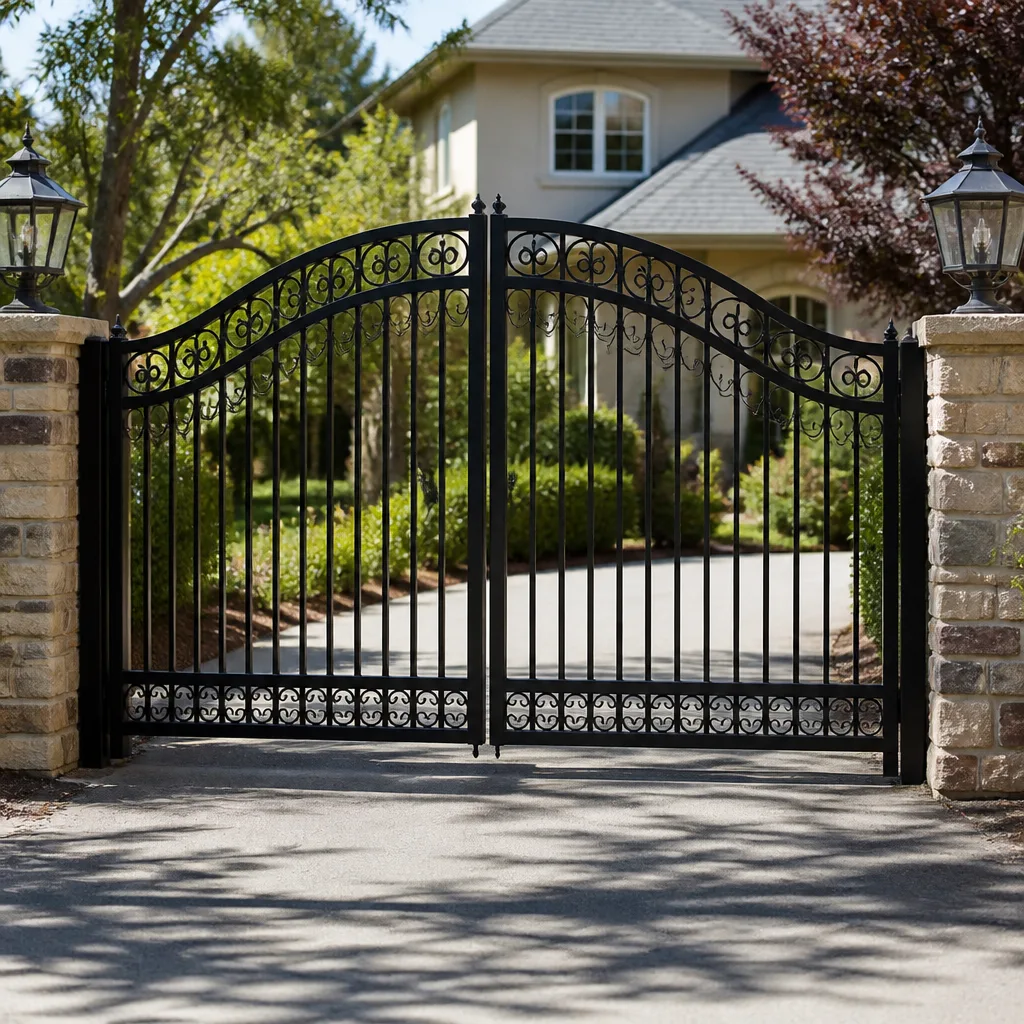 Wrought iron
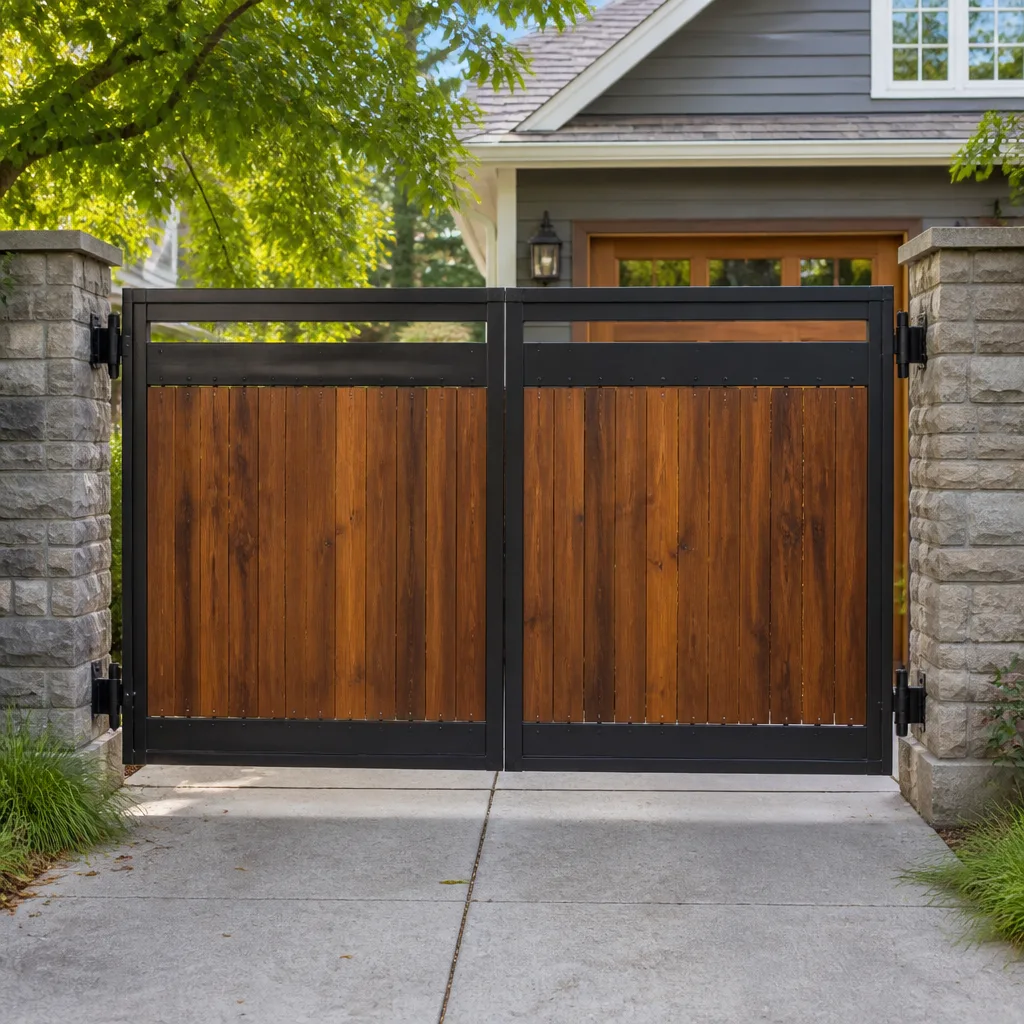 Wood & steel frame
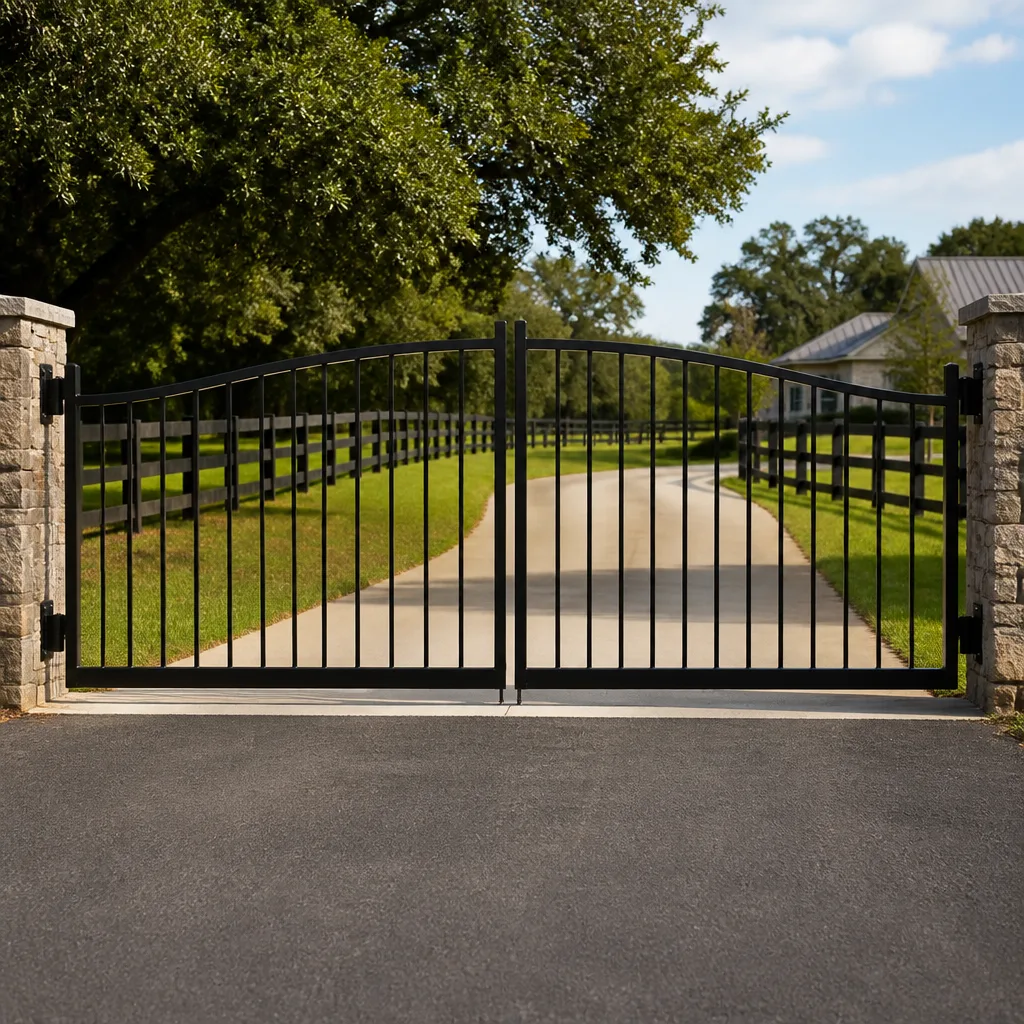 Farm & ranch
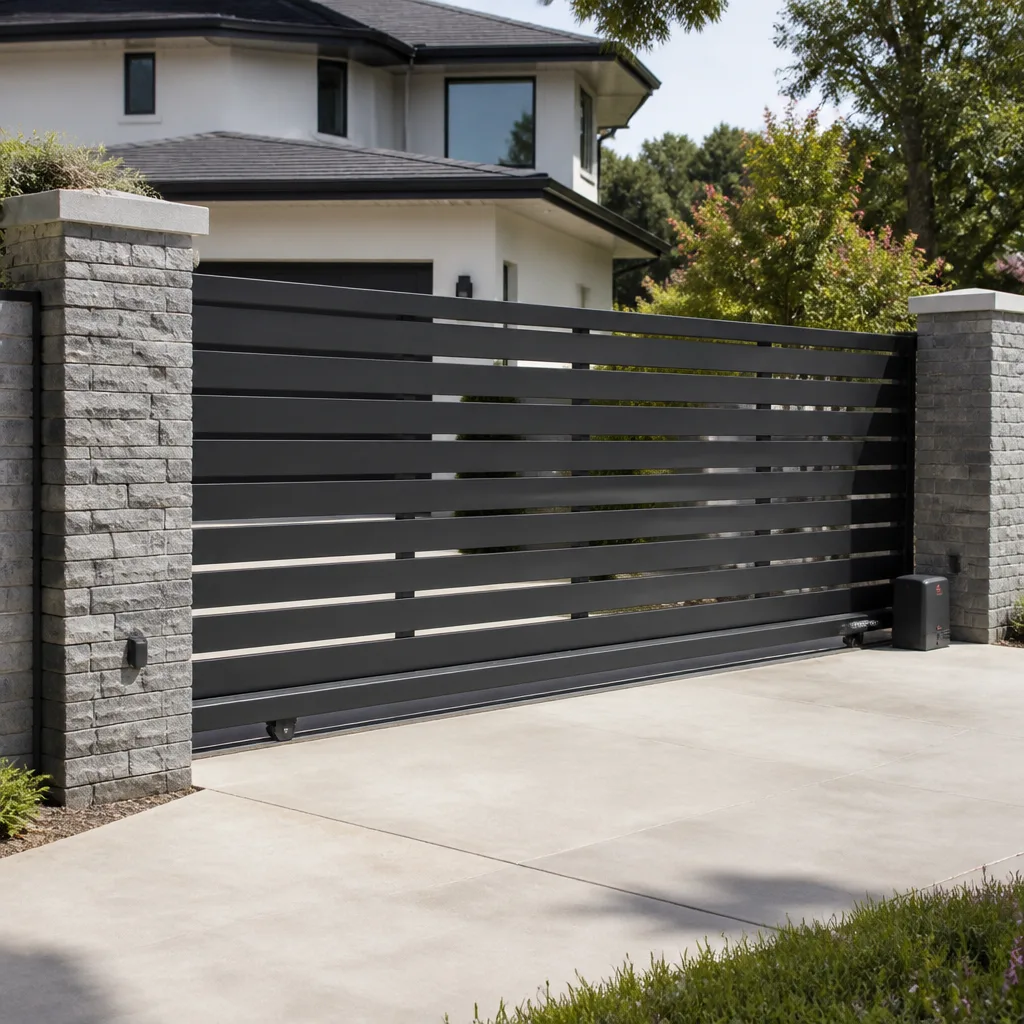 Sliding driveway gates
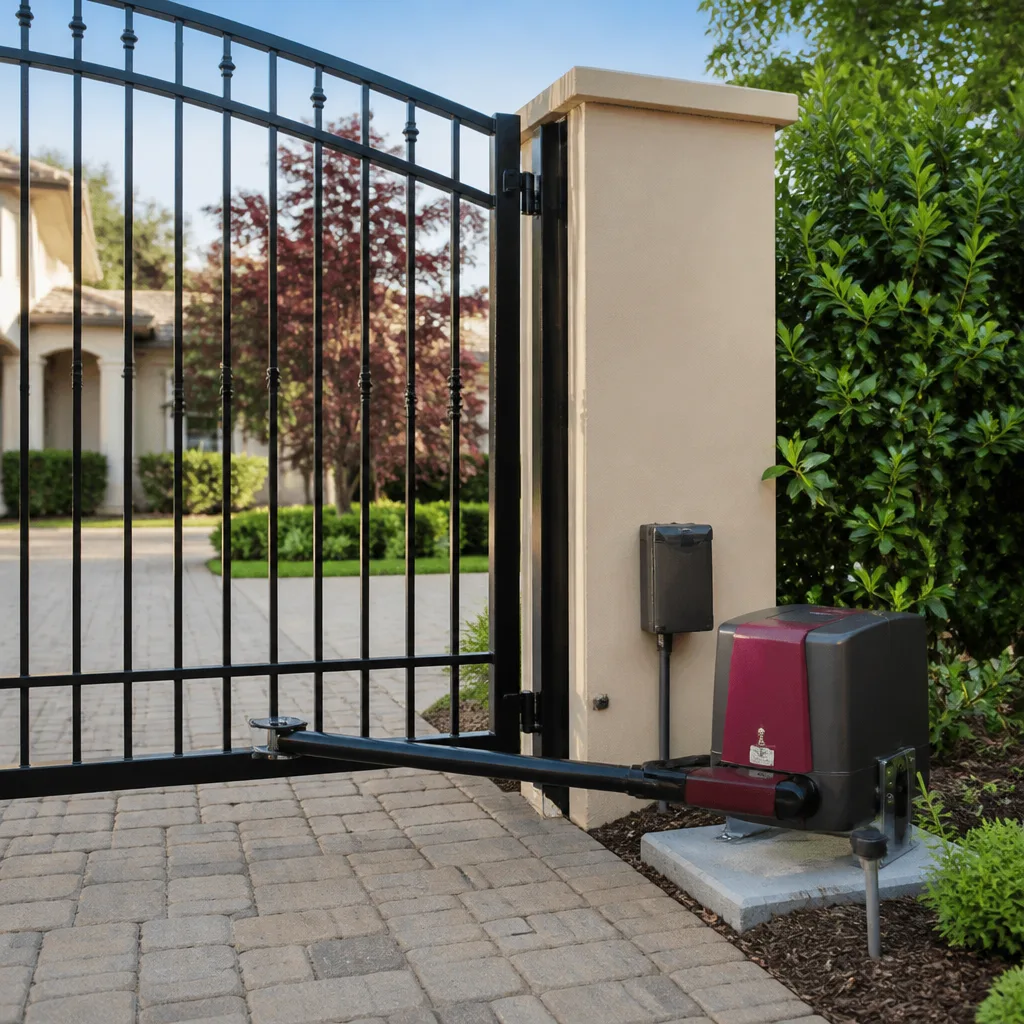 LiftMaster operators
Free on-site gate assessment - hinges, posts, and your LiftMaster or Nice gate operator checked before anything is quoted
The assessment is free and the quote is the invoice.
Get your free estimateGate Repair Warning Signs: A Anaheim Homeowner’s Reference Guide
A gate that “pauses for a second” before opening isn’t a quirk. It’s a control board or sensor fault in early failure mode, and ignoring it typically leads to a complete operator failure within 60 to 90 days. Most Anaheim homeowners don’t have a gate problem that appeared overnight. They had a warning sign they didn’t know how to read. This guide pairs each observable symptom with its likely cause, so you can report it accurately and catch a $200 fix with our Gate Repair services before it becomes a $2,000 replacement.
Styles & brands we work with
Quick Answer
A gate that grinds, hesitates, reverses mid-cycle, or leans visibly is sending a specific mechanical or electrical signal that points to a distinct failing component. The most common warning signs in Anaheim are grinding noises from worn rollers or hinges, slow operation from motor strain, intermittent remote response from a failing control board, and visible post lean from hinge degradation. Catching these early typically keeps repair costs between $180 and $400, while ignoring them leads to full operator or structural replacement in the $1,500 to $2,500 range.
Table of Contents
- Noise as a Diagnostic Tool: Grinding, Squealing, and Clunking
- Slow Operation: When Your Gate Moves Like It’s Tired
- Gate Reversing Mid-Cycle: Sensor Faults and Obstruction Logic
- Intermittent Response: Control Boards, Receivers, and Remote Issues
- Visible Lean and Post Movement: Structural Warning Signs
- Anaheim-Specific Warning Signs: Humidity, Salt Air, and Wrought Iron
- The Basic Sequence Test: Narrowing Down an Electric Gate Problem Before You Call
- Safety-Critical Signs That Override Everything Else
- Common Mistakes to Avoid
- When to Call a Professional
- Frequently Asked Questions
- The Bottom Line
Noise as a Diagnostic Tool: Grinding, Squealing, and Clunking
Noise is the most reliable early warning system your gate has, yet most Anaheim homeowners dismiss it as “the gate being the gate.” A properly functioning gate operator on a well-maintained track or hinge system should move with a consistent, low hum. Anything beyond that is information. Grinding, specifically, is the sound of metal on metal where metal should be rolling or sliding smoothly. It points almost exclusively to roller or wheel wear on sliding gates, or hinge pin wear on swing gates. The fix at this stage is straightforward: replace the worn component before it scores the track or elongates the hinge barrel.
Squealing is a different signal. It usually indicates a lubrication failure rather than a part failure, but here’s the nuance Anaheim weather introduces: dry heat plus coastal humidity cycles can turn a minor lubrication gap into accelerated wear within a single season. A gate that squeals in spring may be grinding by fall. Clunking is the third category, and it’s the most serious. A clunk at the start or end of travel often means the operator’s internal gearing has developed play, or a limit switch is no longer cushioned. We’ve seen clunking gates that still “worked” for months while the operator internals tore themselves apart. In our experience, a clunking noise is a same-week service call, not a monitor-and-wait situation.
What you can do: Open and close the gate once from outside the travel path and note where the sound occurs: start, middle, or end of travel. That single observation cuts diagnostic time significantly when you call a technician. For gates on vehicle access points, do this test from a safe distance and never stand in the gate’s path.
Slow Operation: When Your Gate Moves Like It’s Tired
A gate that operates slower than it did six months ago is usually not “getting old.” It’s signaling mechanical resistance that’s forcing the motor to work against friction. The motor compensates until it can’t. Left unaddressed, that resistance burns out the operator, and the fix jumps from a $150 mechanical adjustment to a full operator replacement. Slow operation on a sliding gate in Anaheim often traces to debris in the track, worn rollers, or a chain that’s lost tension. On swing gates, the culprits are typically hinge wear, post settlement, or a hydraulic or electromechanical operator running low on fluid or developing an internal leak.
Here’s the surprising part for many homeowners: the operator itself is rarely the root cause at this stage. It’s a symptom carrier. A BFT or Linear operator pushing against a binding hinge is like a car engine running with the parking brake half-engaged. It’ll move, but you’re paying for it in motor life. Whether you’re running a BFT, Viking, or Ghost Controls operator, the diagnostic logic holds: mechanical resistance shows up as slow travel before it shows up as complete failure.
Key distinction: If the gate is slow in both directions, suspect a mechanical resistance issue. If it’s slow only when opening, suspect the operator or its capacitor. If it’s slow only when closing, suspect a safety sensor or obstruction logic causing hesitation. This directional clue is one of the most useful pieces of information you can give a technician over the phone.
Gate Reversing Mid-Cycle: Sensor Faults and Obstruction Logic
A gate that reverses direction mid-cycle is one of the most commonly misread warning signs we encounter in Anaheim. Homeowners tend to assume the operator is “confused” or “malfunctioning,” but reversal is actually the system’s safety logic working. Something is telling the control board that an obstruction is present, or a sensor is sending a false positive. The question is whether that signal is real or faulty.
Real obstruction signals come from physical resistance: a branch in the track, a warped section of gate frame, or a loop detector picking up a vehicle or metal object too close to the gate path. Faulty signals come from aging photo eyes, misaligned safety edges, or loop detector wiring that’s degraded in Anaheim’s dry heat. The distinction matters because the fix is entirely different. Cleaning a track or trimming foliage is a maintenance task. Replacing a safety edge or re-terminating loop detector wire is an electrical repair.
Here’s a simple observation sequence to run before you call:
- Clear the entire gate path of debris, vehicles, and metal objects. Test the gate again.
- If it still reverses, note the exact point in the cycle where reversal occurs. Mid-travel reversal points to the safety edge or obstruction sensing. Reversal only at the end of travel points to limit switch or stop setting issues.
- Check whether the photo eye lenses are clean and aligned. Dust, spider webs, and direct afternoon sun can all trigger false positives.
- If the gate reverses only when a vehicle is present, the loop detector may be configured too sensitively. This is a calibration issue, not a part failure.
Reversal that happens intermittently on a Ghost Controls or similar DIY-oriented system is often a sensitivity setting issue that an experienced technician can resolve in one visit. Persistent reversal on a Viking or BFT commercial-grade system usually signals a harder fault in the safety circuit itself.
Intermittent Response: Control Boards, Receivers, and Remote Issues
Intermittent response is the most frustrating warning sign for homeowners because it’s unpredictable. The gate opens fine in the morning, ignores the remote at noon, then works again at dinner. This pattern is rarely the remote’s fault, which surprises people. The remote is a transmitter. If its battery is good and its button makes solid contact, it sends a signal. The problem is almost always on the receiving end.
Three components produce intermittent response: the receiver board, the control board, and the wiring between them. In Anaheim’s temperature swings, thermal expansion and contraction can expose a marginal solder joint or a loose terminal connection. The gate works when cool, fails when hot, returns when the evening marine layer rolls in. That thermal correlation is a diagnostic fingerprint for control board issues.
What to check first:
- Replace the remote battery. One dollar of elimination before a service call is always worth it.
- Test the gate from the keypad or push button. If hardwired inputs work reliably while the remote is intermittent, focus on the receiver.
- If hardwired inputs are also intermittent, the control board or its power supply is the likely culprit.
- Note whether the issue worsens on hot afternoons. This thermal pattern matters to a technician.
Control board replacement on a Linear or DoorKing system is straightforward for a specialist, but misdiagnosis is expensive. Replacing a working receiver because the control board was actually at fault, or vice versa, is the single most common wasted repair dollar we correct after a generalist diagnosis. Ironcrest Gate Repair specializes in gate systems specifically, so we’re not learning your operator’s behavior on the clock. For more guidance, see our article on How to Hire a Gate Repair Contractor in Anaheim: A Step-by-Step Guide. We’re applying patterns from hundreds of prior calls to the same brands Anaheim homeowners actually have installed.
Visible Lean and Post Movement: Structural Warning Signs
A gate that leans is a gate that’s already failing structurally, whether or not the operator still moves it. The lean comes from one of three places: the post has shifted, the hinges have worn and elongated, or the gate frame itself has sagged. All three are progressive. A post that’s an inch out of plumb this year will be three inches out next year, and the gate will bind harder with every cycle.
Post shift in Anaheim is particularly common in neighborhoods with expansive clay soils, where seasonal moisture changes cause ground movement. Homes near the Santa Ana River corridor or in older Anaheim neighborhoods with mature tree root systems see this more often than newer developments on compacted fill. The post is the anchor for the entire system. If it moves, everything attached to it moves too, and the operator takes the brunt of the resulting misalignment.
Signs of hinge failure:
- Gate leaf drops when it opens, requiring a lift to close
- Visible gap between hinge pin and hinge barrel
- Rust staining running down from hinge attachment points
- Gate that shifts or rattles when the wind pushes against it
Hinge replacement on a heavy ornamental steel or wrought iron gate is straightforward work when caught early. When ignored, a failing hinge allows the gate to hang lower and lower until it drags, bending the frame and stripping the operator. At that point the repair conversation becomes a replacement conversation. When a repair reveals the gate is beyond saving, we’ll tell you directly. Repair or replace, we’ll advise which makes sense for your property, and we handle gate installation in-house if replacement is the right call.
Anaheim-Specific Warning Signs: Humidity, Salt Air, and Wrought Iron
Anaheim is not a coastal city, but it sits close enough to the Pacific for marine-layer humidity to reach inland neighborhoods regularly, especially during June Gloom and through the fall. That humidity cycle, combined with warm daytime temperatures, creates a particular corrosion pattern on wrought iron and steel gates that homeowners further inland don’t experience at the same rate. The warning sign to watch for is rust blistering at weld seams.
Rust on the flat face of a gate bar is cosmetic and manageable. Rust at a weld seam is structural. Welds are stress concentrators, and when moisture penetrates the seam and begins oxidizing the joint from inside, the metal expands and pushes the weld apart from within. The visible signal is a raised, flaking crust at the seam that looks different from surface rust. By the time it’s visible, the weld is already compromised. The gate may hold its shape for another year or two, but a lateral push at the wrong moment can snap the joint.
Anaheim-specific warning signs to inspect for:
- Rust blistering at any weld seam, especially on the lower third of the gate where moisture collects
- Peeling or bubbling powder coat finish, which traps moisture against the steel underneath
- White oxidation on aluminum gates, particularly around fasteners and hinge points
- Accelerated roller wear on sliding gates from airborne dust and grit during Santa Ana wind events
For Anaheim homeowners with ornamental gates, an annual weld inspection is worth the time. The gate specialist can sand, treat, and reseal a seam that’s just starting to blister for a fraction of what a structural weld repair or gate rebuild costs once the joint fails completely.
The Basic Sequence Test: Narrowing Down an Electric Gate Problem Before You Call
Electric gate problems are often attributed to the wrong component because the system is interconnected and the symptom doesn’t always point to the source. A gate that opens but won’t close could be an operator problem, a sensor problem, a keypad problem, or a loop detector problem. Before you call a technician, run through this sequence test. It takes ten minutes and saves a service visit’s worth of diagnostic time.
- Test every input method separately. Try the remote, the keypad, the push button, and any intercom or phone entry. Note which work and which don’t. If the keypad works but the remote doesn’t, the operator is fine and the issue is in the receiver or the remote itself.
- Test the gate’s full travel without interruption. Clear the path completely and run the gate one full open and close cycle. Note any hesitation, noise, slowdown, or reversal point.
- Test the safety edge if present. While the gate is closing, press the safety edge with a broom handle from outside the path. The gate should reverse immediately. If it doesn’t, the safety edge or its circuit is dead, and that’s a safety-critical failure, not just a convenience issue.
- Check indicator lights on the control board. If you can see the control board without opening a live electrical enclosure safely, look for error codes or flashing patterns. Many LiftMaster, BFT, and Linear boards use LED patterns to indicate fault type. Note the pattern and call it in.
Never open a control enclosure if it requires removing a cover that exposes wiring you can’t see. The diagnostic benefit isn’t worth the electrical risk. The sequence test above gives your gate technician a clear picture before they arrive, which means a faster diagnosis and a lower bill. When you call Ironcrest Gate Repair home for electric gate repair in Anaheim, having these observations ready helps us route the right parts and the right technician on the first visit.
Safety-Critical Signs That Override Everything Else
Most gate warning signs are maintenance opportunities with flexibility in timing. Three are not. These override any scheduling, budget, or convenience consideration because they involve physical safety for people and pets. If your gate exhibits any of the following in Anaheim, call a gate specialist immediately:
A gate that won’t stop on contact. Every automatic gate is required to have an obstruction sensor of some kind, whether a photo eye, a safety edge, or a current-sensing system in the operator. If your gate pushes through resistance and doesn’t reverse, the safety system is disabled or failed. This is a non-negotiable repair. A gate that doesn’t stop on contact is a serious injury risk to children and pets, and it’s a liability for any property owner.
A trapped or damaged safety edge. The safety edge is the long pressure-sensitive strip mounted on the leading edge of a sliding gate or the bottom of a swing gate. If it’s torn, crushed, or hanging loose, it cannot perform its function, and the gate will close with full force on anything in its path. Replace the edge before the gate is used again.
A gate that free-swings in wind. A swing gate that has lost its mechanical coupling to the operator, or whose hydraulic cylinder has developed an internal leak, can move freely in strong wind. In Anaheim, Santa Ana winds are a real thing, and a free-swinging gate is a projectile. It can strike a vehicle, a person, or a structure, and the damage is uninsurable when the gate owner ignored a known fault.
None of these conditions are “wait until the weekend” problems. When a safety edge on a Viking or BFT system fails, we treat it as an emergency call and get a tech out the same day whenever possible. Prices are quoted and agreed before any work starts, so there’s no surprise on the invoice.
Common Mistakes to Avoid
- Lubricating the wrong parts. Spraying WD-40 on gate electronics, photo eye lenses, or operator internals causes more failures than it fixes. Lubricate hinges, rollers, and chains only, and use the right product.
- Ignoring directional symptoms. “Slow one way but fine the other” is the most useful diagnostic clue a gate gives you, and most homeowners write it off as random. It’s not.
- Replacing the remote before checking the receiver. New remotes are expensive. Intermittent response is usually the receiver or control board. Eliminate the cheap things first.
- Painting over rust without treating the metal. In Anaheim’s humidity cycle, sealing rust under paint accelerates the same corrosion you’re trying to stop. Treat the rust, then paint.
- Leaving the gate on manual mode indefinitely. Most gate operators have a release mechanism that disconnects the operator for manual operation. Leaving the gate dissengaged for months while deciding whether to repair it invites structural wear and leaves the gate unprotected.
- Guessing at the operator brand. “Some kind of garage door opener” doesn’t help a technician source parts. The brand and model are printed on the operator or the control board. A clear photo of the label on your first call fixes fifty percent of the diagnostic timeline.
When to Call a Professional
You should call a gate specialist when the warning sign involves the operator, the control board, any safety device, or any structural component you can’t clearly see and access safely. That covers most of what’s in this guide. The gate systems Anaheim homeowners depend on, from residential Ghost Controls and Mighty Mule units to commercial DoorKing and FAAC installations, share a common truth: early intervention is cheaper than failure replacement by a factor of five or more. Ironcrest Gate Repair offers free estimates for Anaheim homeowners, and our pricing is quoted and agreed before any work begins. For a diagnostic visit or a same-week repair, call (833) 589-7839. If you’re looking for Gate Repair in Brea or surrounding areas, we serve those neighborhoods too.
Frequently Asked Questions
Gate repair in Anaheim typically costs between $180 and $400 for mechanical issues like roller, hinge, or track adjustment, while control board replacement, operator rebuilds, and wiring repairs run from $500 to $1,800 depending on the brand and complexity of the system. A full operator replacement on a LiftMaster, Viking, or BFT gate can range from $1,500 to $2,500 including labor. The exact quote depends on what your gate tells us during diagnosis, and we always quote the price before any work starts. Call (833) 589-7839 for a free estimate with no obligation.
The most common gate failure we see in Anaheim is roller or hinge wear from accumulated dust, grit, and humidity-cycle corrosion. The mechanical wear creates resistance, the operator’s motor works harder, and the resulting failure is often misread as an electrical problem when it’s actually structural. By the time the operator fails, the root cause has been building for months.
Many mechanical repairs and safety device replacements can be completed same-day or within 24 hours, depending on parts availability for your specific operator brand. Electric gate repair is a core service for us, not an add-on, which means our Anaheim technicians carry common parts for LiftMaster, Linear, Viking, Ghost Controls, and other major brands on the truck. Call (833) 589-7839 and describe the symptom; we’ll tell you straight whether it’s a same-day fix or a parts-order situation.
Yes. Gate installation includes the full system: operator mounting, electrical connection, safety devices, keypad and intercom wiring, and loop detectors where needed. We handle Electric Gate Repair in Brea and across the Anaheim area with the same in-house team, so no hand-off to a separate electrical contractor.
When the gate frame is in good structural shape and the operator is the failed component, repair is almost always the right call. When the posts have shifted, the frame has rusted through at the welds, or the hinges have elongated beyond repair, replacement makes more economic sense. We’ll show you the numbers on both options and make a recommendation without pushing you toward the more expensive one. If you’re in the market for a new system instead of a repair, see Gate Installation in Brea for what a full install includes.
We service nine major gate operator brands across residential and commercial categories, including LiftMaster, BFT, Linear, Viking, Ghost Controls, DoorKing, Elite, FAAC, and Mighty Mule. Whether you have an entry-level DIY system or a high-cycle commercial operator, we’ve worked on your system before.
The Bottom Line
Gates almost never fail without warning. Grinding noise means a worn mechanical component. Slow operation means motor strain from resistance. Reversal means a sensor or obstruction signal. Intermittent response means a control board or receiver issue. Lean means structure. Each symptom maps to a distinct diagnostic pathway, and reading that map correctly is the difference between a $200 repair next week and a $2,000 replacement next season. For Anaheim homeowners, the humidity cycle adds rust-related warning signs that need attention before the welds give out, and the Santa Ana winds make any free-swinging gate an immediate hazard. The most useful thing you can do is stop ignoring what your gate is already telling you. Explore more guides & resources to keep your system running safely.
Written by the team at Ironcrest Gate Repair, serving Anaheim since 2017.
See the difference
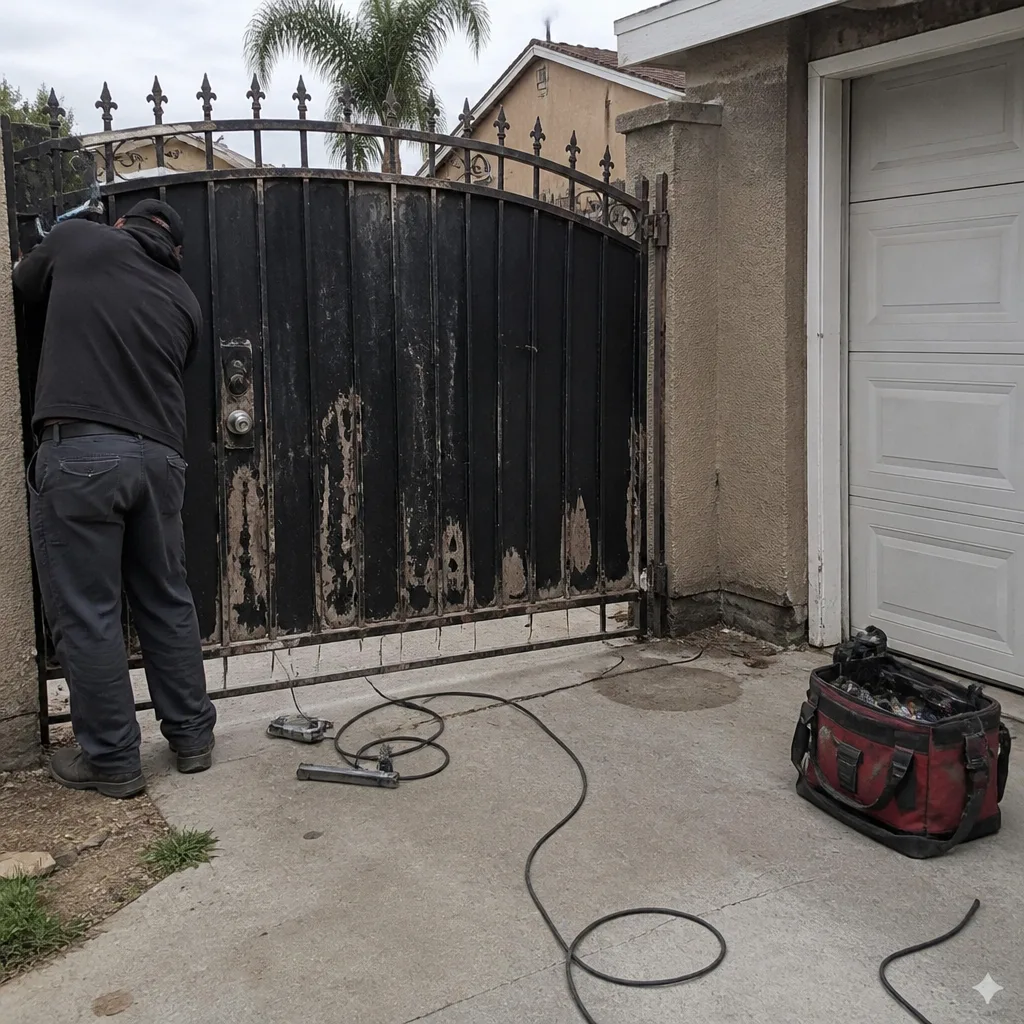
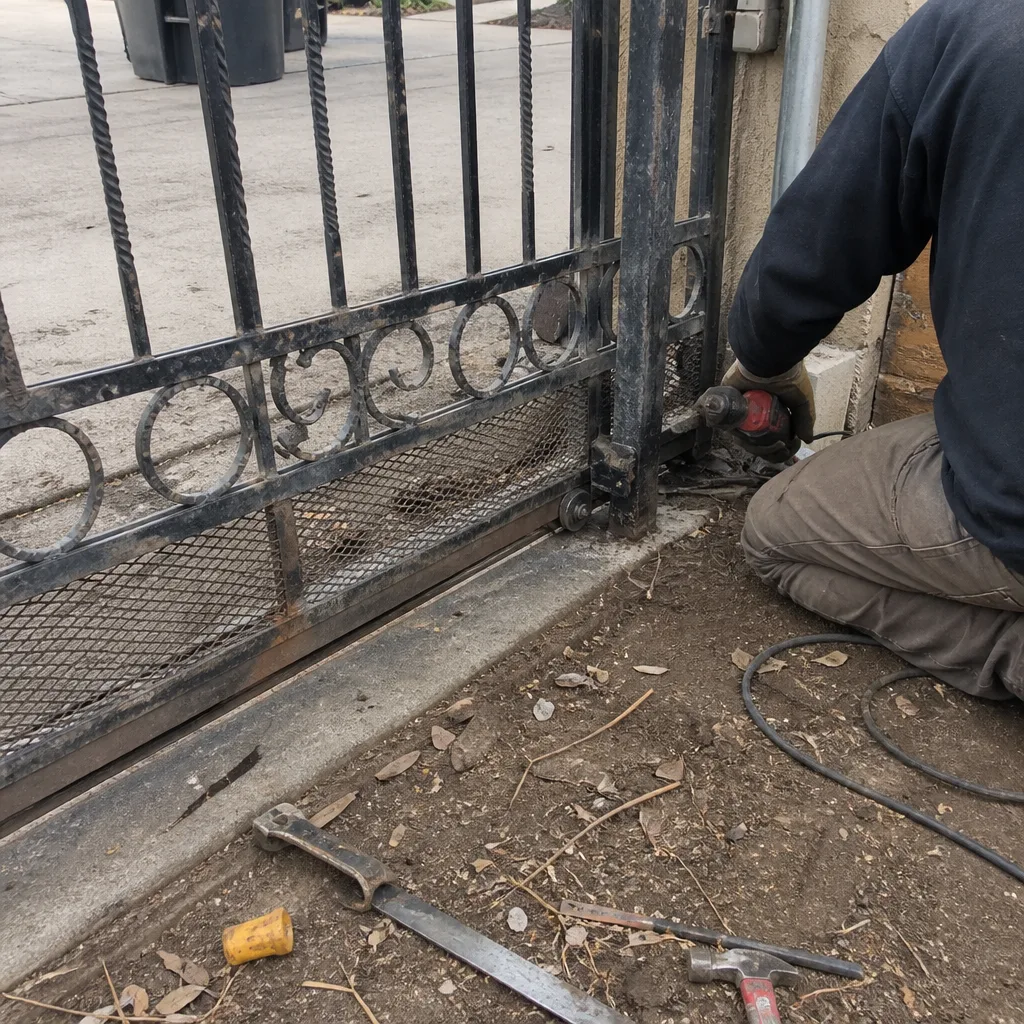 Before
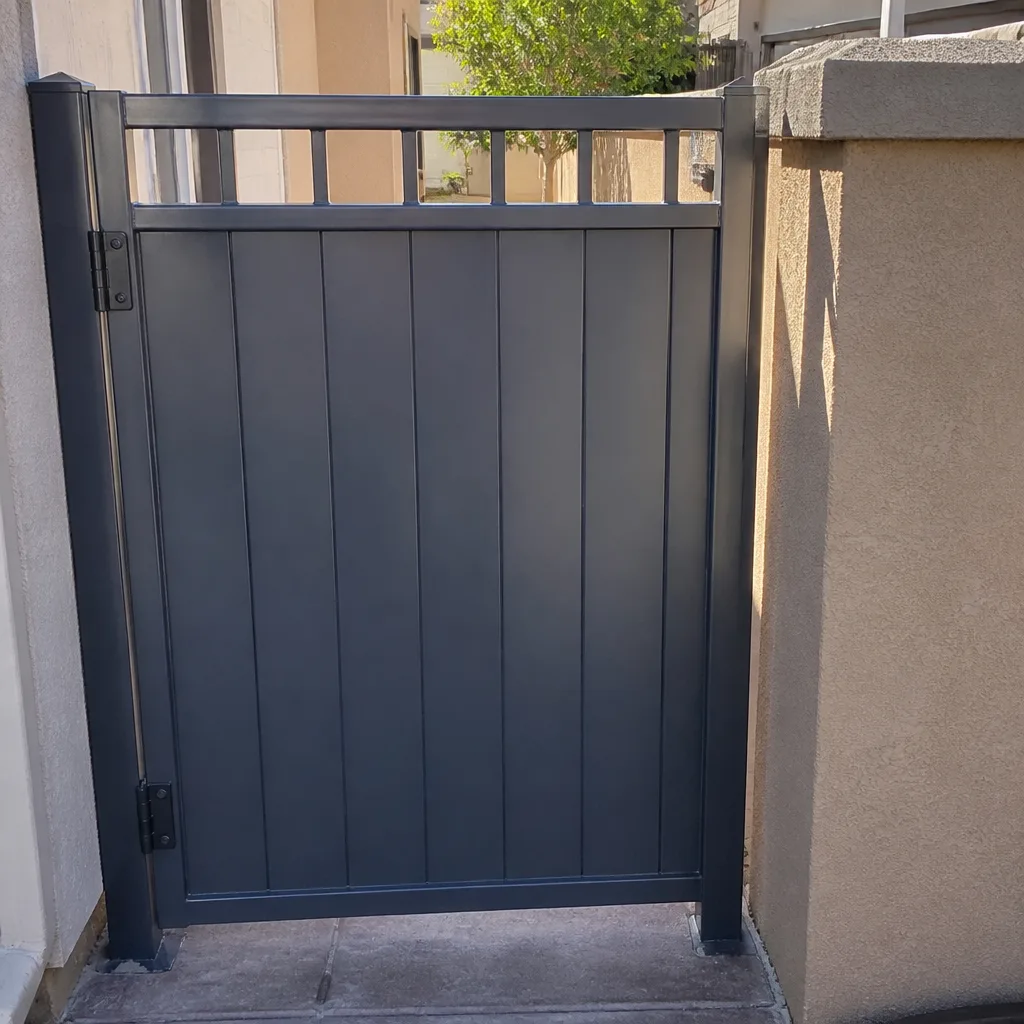
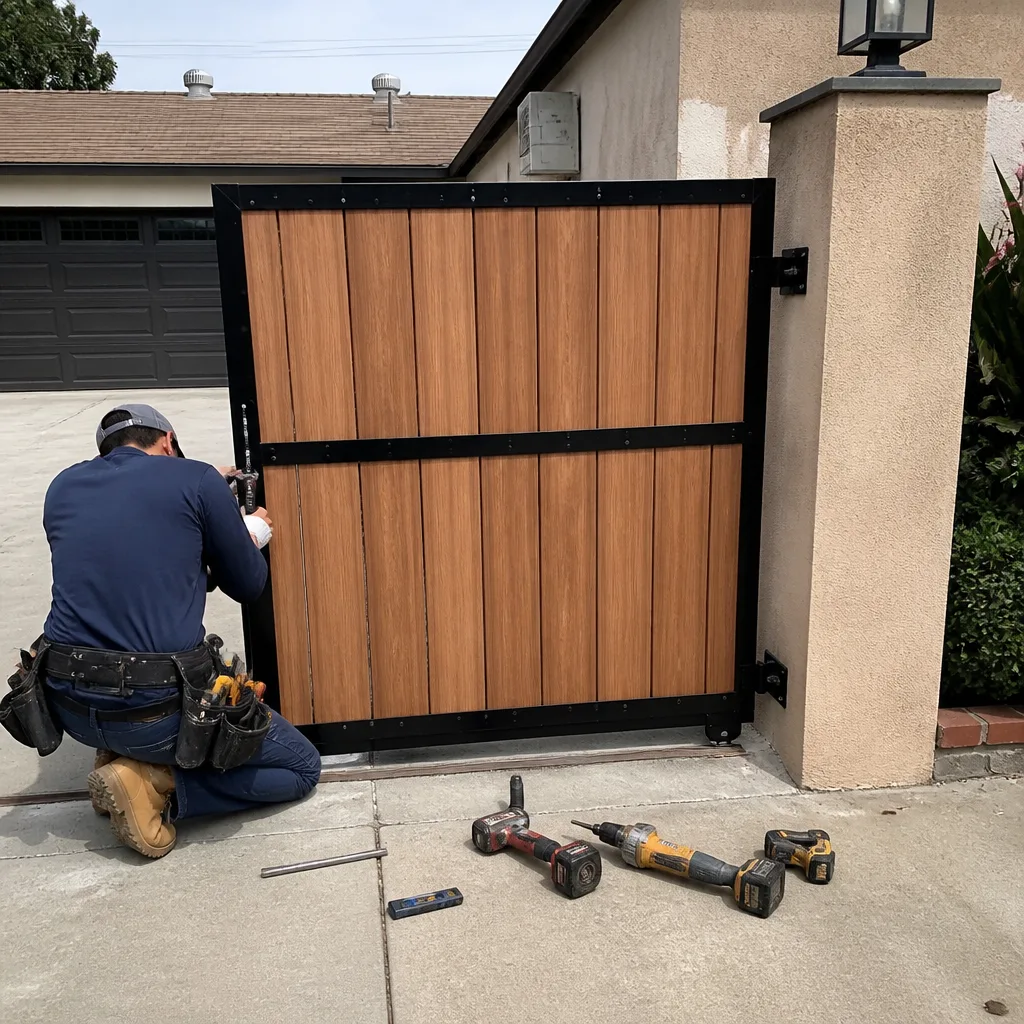
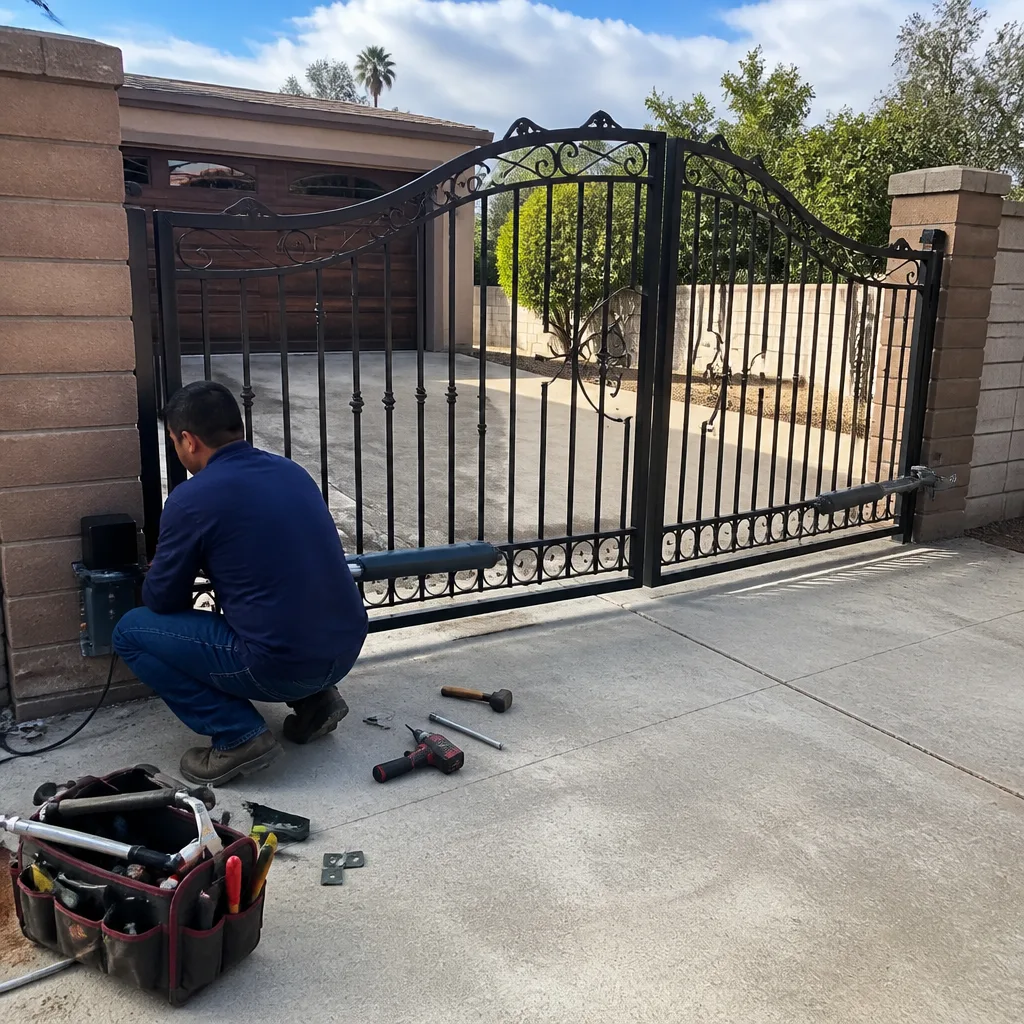 After
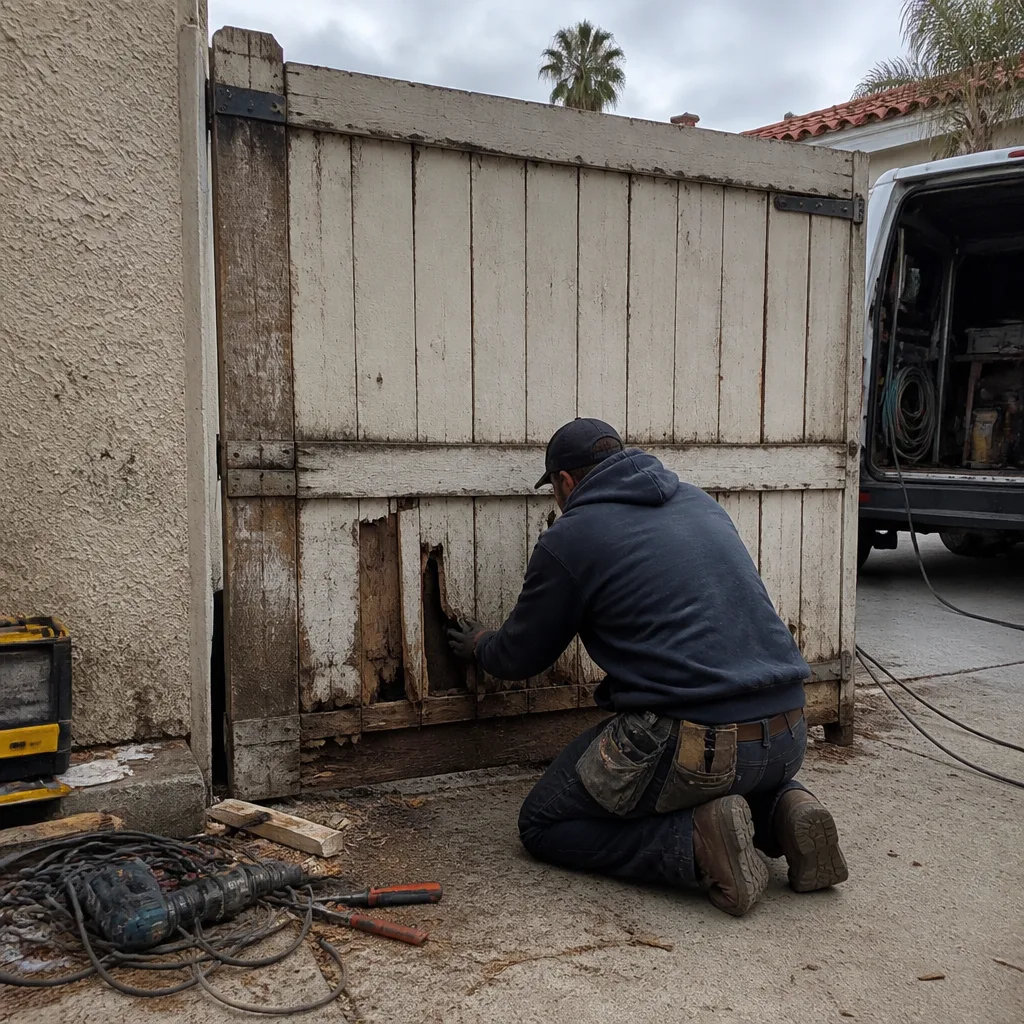 Before
 After
 Before
 After