
Last updated October 31, 2026
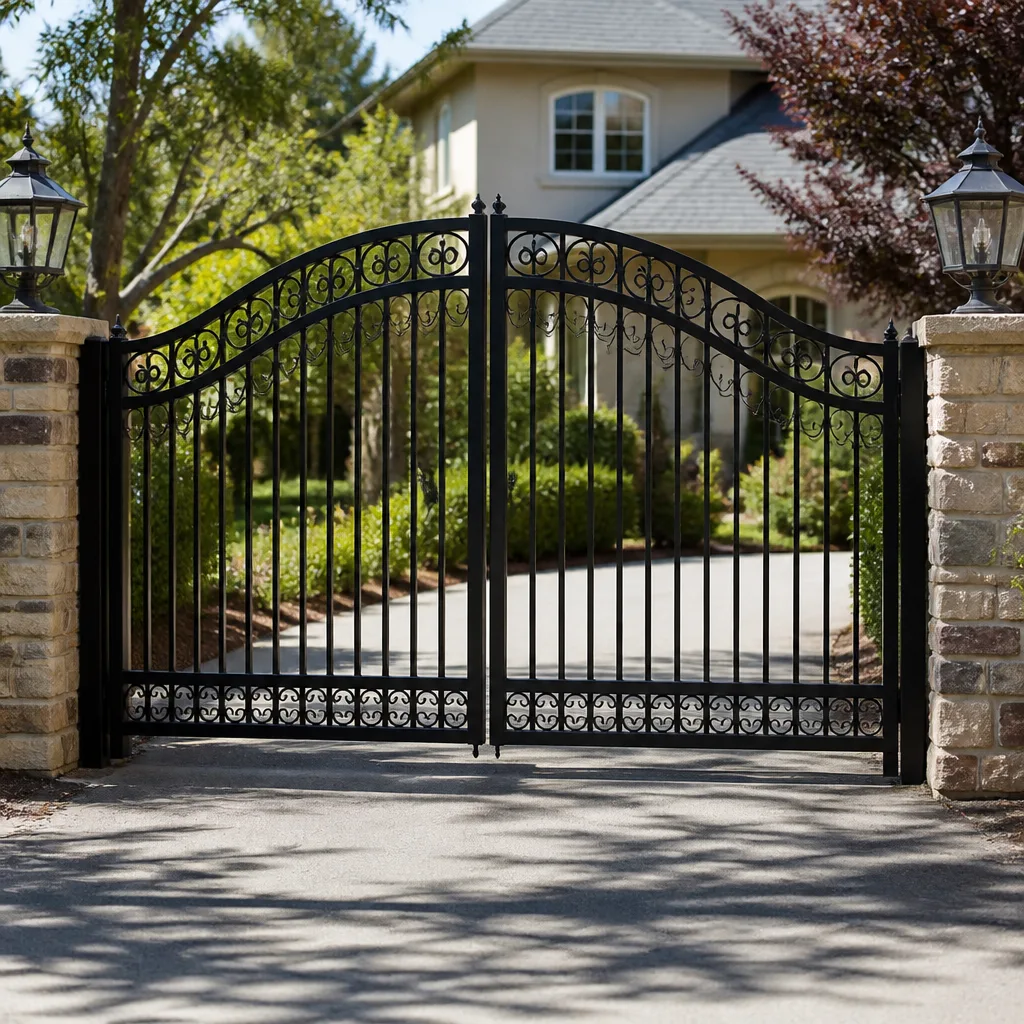 Wrought iron
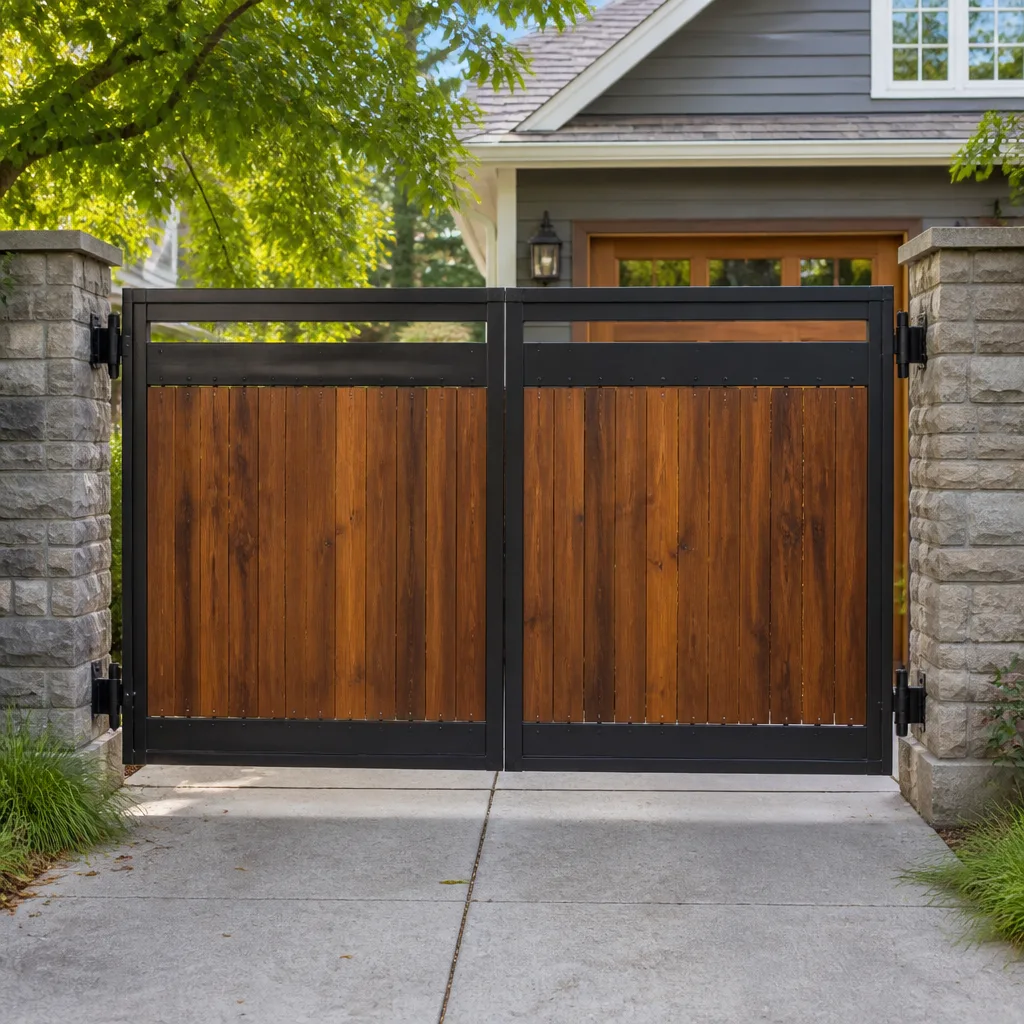 Wood & steel frame
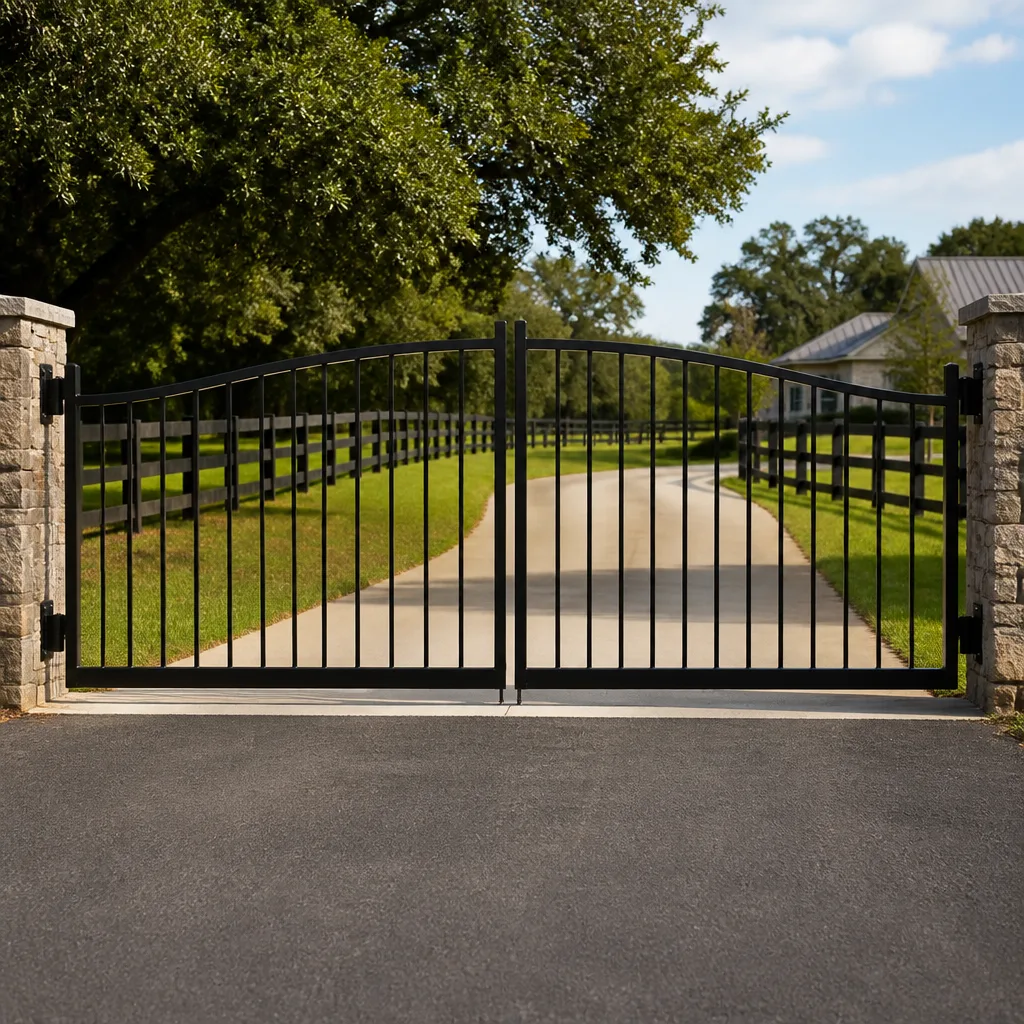 Farm & ranch
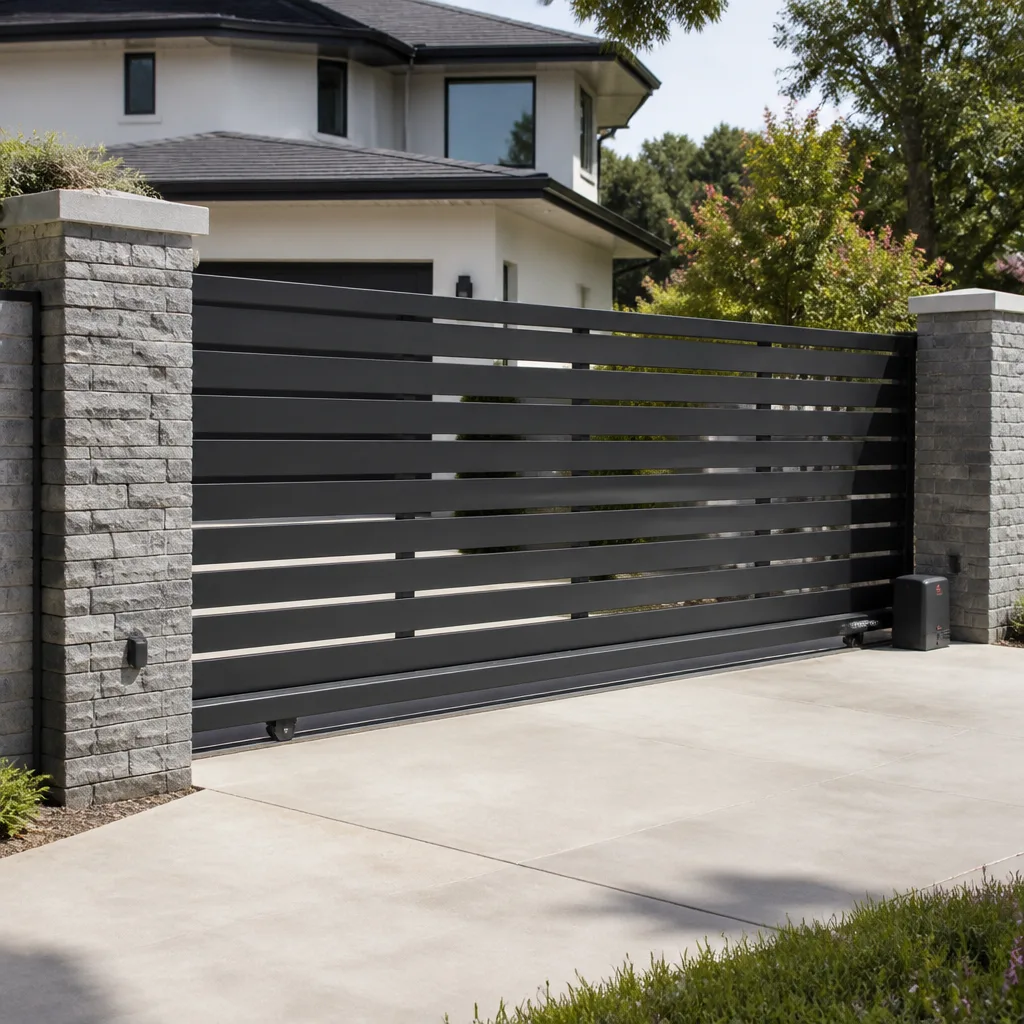 Sliding driveway gates
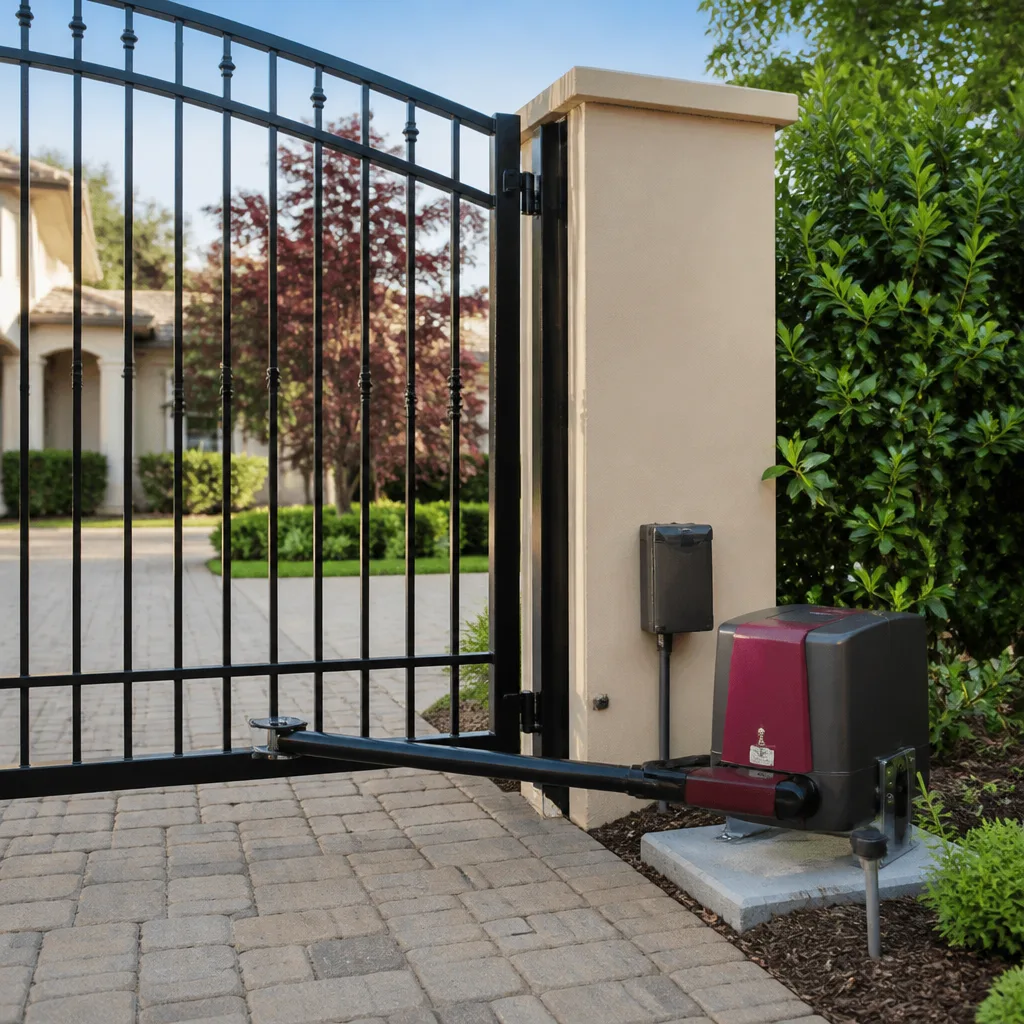 LiftMaster operators
Free on-site gate assessment - hinges, posts, and your LiftMaster or Nice gate operator checked before anything is quoted
The assessment is free and the quote is the invoice.
Get your free estimateThe Complete Gate Repair Guide for Anaheim Homeowners
Anaheim’s clay-heavy soil expands and contracts up to 4 inches seasonally, and your gate posts are sitting directly in it. That movement is the root cause behind most “sudden” gate failures that actually took 18 months to develop. This guide maps that predictable failure sequence so you can intervene at the right stage, before a leaning post becomes a snapped hinge and a snapped hinge becomes a burned-out operator motor. You’ll learn what actually fails first on Anaheim gates, what repairs cost in this market, when a repair makes sense versus a full replacement, and how to document your gate’s condition so you’re never guessing when it’s time to call a specialist for our Gate Repair services.
Styles & brands we work with
Quick Answer
Most gate failures in Anaheim follow a predictable sequence: soil movement shifts the post, the shifting post stresses the hinges, the stressed hinges make the gate drag, and the dragging gate burns out the operator motor. Catching the problem at the post or hinge stage costs $150 to $450 in most cases. Waiting until the operator fails typically runs $600 to $2,200, and if the post foundation has truly failed, you’re looking at a structural fix before anything else can be addressed.
Table of Contents
- Why Anaheim Soil Is Harder on Gates Than Coastal or Desert Cities
- The 4-Stage Gate Failure Sequence Every Anaheim Homeowner Should Know
- The Repair Decision Tree: Adjust, Reinforce, or Replace?
- Component Lifespan Benchmarks for Anaheim’s Climate
- HOA Considerations for Gated Communities in Anaheim Hills and Beyond
- How to Document Gate Condition Over Time
- Electric Gate Repair: What Actually Goes Wrong
- Gate Installation vs. Repair: How to Decide
- Common Mistakes to Avoid
- When to Call a Professional
- Frequently Asked Questions
- The Bottom Line
Why Anaheim Soil Is Harder on Gates Than Coastal or Desert Cities
Anaheim sits on a specific blend of expansive clay and alluvial soil that behaves differently from what you’d find in Huntington Beach or Palm Springs. Coastal cities deal with sandy, well-draining soil that holds posts relatively still. Desert cities deal with dry, compacted soil that barely moves. Anaheim gets both: clay that swells when winter rains arrive and shrinks during the long dry summer, plus the settling that comes from decades of irrigation, construction, and seismic micro-activity.
The practical result is a gate post that never quite stays where you put it. Over an 18-month cycle, a post in this soil can drift 1 to 3 degrees off plumb without any visible damage to the gate itself. The gate still opens and closes, so nobody notices. But the hinge geometry is now wrong, and every open-close cycle is slowly working the hinge bolts loose or bending the hinge leaves. We’ve pulled hinges off Anaheim gates that were so deformed from this exact pattern that the homeowner assumed a vehicle had hit the gate. Nobody hit it. The soil did.
What This Means for Your Gate
- Post lean precedes gate sag. The gate isn’t sagging because it’s heavy; it’s sagging because the post it hangs from has moved.
- Repair sequencing matters. You cannot properly realign a gate on a post that’s still moving. The post foundation gets addressed first, then the gate.
- Seasonal inspections catch this early. A visual check at the start of summer and the start of the rainy season will catch post drift before the hinge failure cascades.
The 4-Stage Gate Failure Sequence Every Anaheim Homeowner Should Know
Most gates don’t fail all at once. They follow a four-stage progression, and each stage has a distinct signature. Knowing where your gate sits in this sequence tells you what the repair will involve and what it will cost before the technician ever arrives.
Stage 1: Post Drift (Months 0-6)
The post shifts 1 to 2 degrees off vertical. The gate still works fine. You might notice the gap at the latch side is slightly wider at the top than the bottom. There’s no noise, no drag, no visible damage.
What to do: This is the cheapest stage to fix. A post that’s only slightly out of plumb can often be stabilized and re-secured before it gets worse. Some Anaheim properties with concrete-filled steel posts may only need the concrete collar around the base repaired. If you catch it here, you’re looking at a few hundred dollars instead of a few thousand.
Stage 2: Hinge Stress (Months 6-18)
The misaligned post now puts uneven load on the hinges. The top hinge typically fails first because it carries the tension load while the bottom hinge carries the compression. You’ll hear a creak or a low groan when the gate opens. The gate may look subtly tilted, with the latch side dropping half an inch to an inch.
What to do: Hinge replacement at this stage is straightforward IF the post is still sound. On an Ironcrest Gate Repair home service call, we always check the post before replacing hinges because putting new hinges on a drifting post just transfers the stress right back into the new parts. A hinge replacement on a residential swing gate in Anaheim typically runs $150 to $350 depending on the gate weight and hinge type.
Stage 3: Gate Drag (Months 18-36)
The gate now physically drags or scrapes at the latch side. You can see a bare patch on the concrete or asphalt where the gate edge has been grinding. The drag creates resistance, which means your automatic operator has to push harder on every single cycle.
What to do: This is the stage where most Anaheim homeowners first notice a problem, because now there’s a sound or a visible mark. The fix at this stage may involve re-hanging the gate, replacing worn hinge bushings, addressing the post, or some combination. It’s no longer a single-part replacement.
Stage 4: Operator Failure (Months 36-48+)
The operator motor has been working against increasing resistance for months or years. The motor windings overheat, the control board trips repeatedly, or the gear assembly strips. The gate either won’t open, opens halfway and stops, or makes a grinding noise while the gate barely moves.
What to do: Now the repair involves both the mechanical issue that caused the drag AND the electrical issue that resulted from it. Fixing only the operator without addressing the gate drag means the new or rebuilt operator will fail the same way in another year or two. This combined repair is where costs climb into the $1,000+ range, and it’s often the point where a full replacement becomes worth pricing out, as covered in DIY vs Professional Gate Repair: The Anaheim Homeowner’s Decision Guide.
Key Takeaways: The Failure Sequence
- The earliest warning signs (slight post lean, subtle gate tilt) are the cheapest to fix.
- Operators rarely fail on their own; they’re usually the last domino in a mechanical chain.
- Every repair stage has a different cost profile, and knowing your stage keeps you from overpaying for a patch job.
The Repair Decision Tree: Adjust, Reinforce, or Replace?
Here’s the step-by-step process we walk through on every gate evaluation in Anaheim. It’s the difference between a repair that lasts and one that returns in six months.
- Assess the post first. Is it plumb? If not, is the movement active or settled? Active movement (post still shifts when you push on it) means the foundation has failed and must be re-set or reinforced before anything else. Settled movement (post is off-plumb but rock solid) can sometimes be compensated with hinge adjustments.
- Check the hinges and pivot hardware. Look for elongated screw holes, bent hinge leaves, worn bushings, or rust at the contact points. Hinges that have been stressed by post drift will show visible deformation.
- Evaluate the gate frame itself. Is the gate square? A gate that has twisted from dragging may need to be re-squared or re-welded, and if the frame is rusted through at the bottom rail, patching it is a temporary fix at best.
- Test the operator under load. Disconnect the operator and open the gate manually. If the gate moves freely by hand, the mechanical side is fine and the problem is electrical. If it drags or binds by hand, the operator is working against a mechanical problem and any electrical repair will be premature until that’s fixed.
- Get a written price with the option to fix or replace. A gate that needs a new post, new hinges, a re-squared frame, and a rebuild on the operator may exceed 60% of the cost of a new gate. When that happens, replacement is usually the smarter money. We’ll tell you plainly which one makes sense.
For homeowners in Brea facing the same decision, the process is nearly identical. Our Gate Repair in Brea page covers the same decision framework for that side of Orange County, including the specific soil and HOA factors we see there.
Component Lifespan Benchmarks for Anaheim’s Climate
Anaheim’s sustained UV exposure, summer heat, and clay soil movement create a specific wear profile for gate components. These benchmarks assume normal residential use, a properly installed gate, and northern Orange County climate conditions. Your mileage will vary, but these are the ranges we consistently observe.
| Component | Expected Lifespan in Anaheim | Typical Failure Mode |
|---|---|---|
| Powder-coated steel gate frame | 12-20 years | Rust at welds and bottom rail first |
| Wrought iron ornamental elements | 15-25 years | Rust at scroll joints and finials |
| Hinges (residential swing gate) | 5-10 years | Bushing wear, deformation from post stress |
| Gate operator (residential, LiftMaster or Mighty Mule) | 7-12 years | Gear wear, control board failure, motor burnout |
| Gate operator (commercial, DoorKing or Elite) | 10-20 years with maintenance | Contactor failure, limit switch wear, capacitor failure |
| Keypad / access control faceplate | 4-8 years in direct sun | UV degradation of membrane, cracked housing |
| Loop detector (embedded in pavement) | 8-15 years | Wire break from pavement movement |
| Concrete post footer (clay soil) | 5-15 years depending on drainage | Soil movement cracking or moving the footer |
Note the hinge lifespan versus the operator lifespan. In Anaheim’s climate, the hinge is the repeat offender. A wholesale gate replacement that reuses the old concrete footer will often inherit the exact soil movement problem that caused the first gate to fail. When we handle Gate Installation in Brea or Anaheim projects, the footer gets evaluated as part of the installation scope, not assumed to be reusable.
HOA Considerations for Gated Communities in Anaheim Hills and Beyond
If you live in a gated community in Anaheim Hills, the path from “my gate is broken” to “my gate is fixed” runs through your HOA’s architectural committee or property management office. This isn’t a bureaucratic annoyance; it’s a legal reality of living in a common-interest development. The gate is often classified as common area or limited common area, even when it serves only your driveway.
- Determine ownership of the gate. Is the gate part of the community’s common elements, or is it your private property within your lot line? This dictates who pays for the repair and who must approve it. Your CC&Rs answer this question in writing.
- Gather the written approval before any work begins. Many Anaheim Hills HOAs require an ARC (Architectural Review Committee) submission for any gate replacement, and some require it even for a color-matched paint job. Repairs that restore original condition are often exempt, but replacements that change the gate’s appearance, height, material, or operator type typically are not.
- Match materials and style to community standards. If the HOA requires a specific gate finish, hardware color, or operator type, the repair or replacement must conform. A mismatched gate can trigger a violation notice even if it’s brand new and functional.
- Understand the emergency exception. Most HOAs have a provision for emergency repairs to secure the property. If your gate is open and cannot close, that’s a security issue, and many HOAs will permit immediate repair with retroactive approval. Confirm this in writing with your property manager before assuming it applies.
We’ve worked on Anaheim Hills properties where the gate itself was private but the operator wiring ran through HOA-maintained conduit. That kind of split responsibility requires a conversation before anyone opens a trench. If you’re not sure, get your property manager on the phone early.
How to Document Gate Condition Over Time
Most Anaheim homeowners can’t tell us when their gate started sagging because they didn’t notice the sag until it was visible from the street. A simple documentation habit changes that. Here’s the system that takes five minutes twice a year and gives you an actual repair history instead of a guess.
- Take four photos, same angles, every time. Stand at the same spot for each shot: full gate from the street side, full gate from the driveway side, close-up of the hinge area, close-up of the latch or operator arm. Consistent angles let you compare frames over time.
- Measure the latch-side gap. With the gate closed, measure the gap between the gate edge and the latch post at the top and the bottom. A difference between top and bottom measurements is your earliest objective sign of gate sag or post drift. Write both numbers down.
- Note any change in opening sound or speed. If the gate used to open smoothly and now hesitates, groans, or slows halfway through its travel, write that down with the date. Sound and speed changes precede visible damage.
- Keep a simple log. A notes app entry with the date, the measurements, and one sentence about anything unusual is enough. After two years, you’ll have a clear picture of whether your gate’s condition is stable or degrading.
This log does three things when you call us. It tells us what’s changed and how fast. It helps us pinpoint which stage of the failure sequence you’re in. And it gives you an evidence-based answer to the replacement question: if the log shows the gate needed two hinge replacements, a post repair, and a motor rebuild in three years, replacement stops being a judgment call and becomes simple arithmetic.
Electric Gate Repair: What Actually Goes Wrong
Electric gate operators are the most misunderstood component in the whole system. Homeowners assume the operator is the gate; it isn’t. The operator is one part, and its job is to move the gate and hold it secure. When the operator fails, the real question is whether it failed on its own or was killed by the mechanical problem upstream.
Our practice is built around electric gate repair as a primary service, not an add-on. That means we diagnose the actual brand in your driveway, whether that’s a LiftMaster unit on a residential swing gate, a DoorKing slide operator on a commercial access point, or a Mighty Mule kit on a farm-style gate. Each of those brands has its own known failure modes, and the diagnostic path differs.
Common Electric Gate Operator Failures We See in Anaheim
- Burnt-out motor from sustained drag: The operator has been pushing a dragging gate for months. The motor windings overheat, the unit shuts off mid-cycle, or it simply stops responding. The operator fix here is secondary to the gate fix.
- Failed control board from power surges or heat: Anaheim’s summer heat plus occasional grid surges can fry a control board. Symptoms include the gate opening but not closing, the keypad not responding, or the operator making a clicking sound but not moving.
- Stripped gear assembly: This is the signature sound of a commercial DoorKing or Elite operator that’s been run hard for years. The motor spins, but the output shaft doesn’t move the gate. Gear replacement is a bench job on most of these units.
- Failing loop detector or safety edge: The gate reverses for no reason, or won’t hold closed because it thinks a vehicle is present. Loop detectors in Anaheim fail from pavement movement breaking the wire; safety edges fail from UV exposure hardening the rubber.
- Keypad or intercom communication failure: The gate works manually but won’t respond to the keypad or call box. This is often a wiring issue in the conduit or a failed access control board inside the operator housing.
For readers on the west side of Orange County, our Electric Gate Repair in Brea page goes deeper on operator-specific diagnostics for that area, including the commercial slide operators we service there.
Gate Installation vs. Repair: How to Decide
Repair or replace, we’ll tell you which one makes sense. Here’s the honest framework, because sometimes a repair is just throwing money into a gate that’s already at the end of its service life.
When Repair Makes Sense
- The gate frame is square, rust-free at the bottom rail, and the welds are intact.
- The post is stable or can be stabilized without a full footer replacement.
- The operator is a current model with available parts and a clean service history.
- The repair cost is under 40% of a replacement gate’s installed cost.
- The gate is under 10 years old and the failure was caused by a single identifiable issue.
When Replacement Makes Sense
- The gate frame is rusted through at the bottom rail or at weld points.
- The post footer has cracked and the post is actively moving; re-setting it means removing and re-pouring concrete.
- The operator is discontinued and parts are no longer manufactured.
- You’ve had two or more hinge replacements in three years, indicating a fundamental geometry problem.
- The repair estimate exceeds 60% of the cost of a new gate with a new footer.
When replacement is the call, the advantage of working with a gate specialist is that we handle installation and repair under the same roof. You don’t schedule a repair diagnosis, then wait for a different contractor to come install the replacement. The person who tells you the gate is done is the same team that quotes the new one, and the price is written down before any work begins.
Common Mistakes to Avoid
- Replacing the operator before fixing the gate drag. A new motor on a dragging gate is a $600 to $1,200 down payment on the same failure in two years. Check the manual swing of the gate first.
- Assuming a leaning post just needs to be pushed back. A post that’s moved once will move again if the footer wasn’t addressed. Shimmying it back into place without fixing the foundation is cosmetic, not structural.
- Painting over rust instead of treating it. Anaheim’s dry climate can lull you into thinking surface rust is stable. It isn’t, especially at weld joints and the bottom rail where moisture sits. Wire brush it, treat it, then paint it.
- Skipping the HOA approval on a gate replacement. Replace the gate first and ask permission later, and you may be redoing the work at your own cost. Get the written approval before the first hole is dug.
- Letting a sagging gate ride through the rainy season. Clay soil movement is most active when the ground moisture changes. A gate that’s slightly off in October can be badly off by March.
- Hiring a generalist who Googles the manual on-site. Gate operators have brand-specific diagnostic procedures. A technician who has never worked on your specific LiftMaster or DoorKing model is learning on your dime.
When to Call a Professional
Some gate problems are obvious and urgent. Your gate won’t open and you can’t leave the driveway? Call a professional immediately. The same applies if the gate won’t stay closed, if the operator makes a grinding noise while the gate barely moves, or if you see exposed wiring near the operator housing.
Other situations are more subtle but should also trigger a call: your gate has started dragging on the pavement, the latch no longer lines up, you hear a creak on every cycle, or your keypad intermittently fails. None of these resolve themselves, and in Anaheim’s soil, the small problem is actively becoming a bigger one while you wait. Ironcrest Gate Repair offers free estimates in Anaheim, call (833) 589-7839.
Frequently Asked Questions
Most residential gate repairs in Anaheim fall between $150 and $450 for hinge replacement, post stabilization, or latch realignment. When the repair involves an electric operator, the range widens to $600 to $2,200 depending on the brand, the specific component, and whether the mechanical problem that caused the operator failure also needs to be fixed. The price is quoted and agreed upon in writing before any work starts. Call (833) 589-7839 for a free estimate on your specific gate.
Same-day service depends on the nature of the call and current scheduling in your part of Anaheim. Emergency repairs where the gate cannot close at all are prioritized because that’s a security issue, not a convenience issue. A dragging gate that still operates can usually be scheduled within a few days. Call us with the symptoms you’re seeing and we’ll give you a straight answer on timing.
In Anaheim, the primary cause of gate sag is post drift in the expansive clay soil. The post moves slightly out of plumb, the hinge geometry changes, and the gate drops at the latch side. Gate sag can also result from worn hinge bushings, a gate frame that’s rusted at the bottom rail, or an undersized post that was never adequate for the gate’s weight. The fix depends on which cause is active, which is why post assessment comes first on every call.
We service nine major gate operator brands across residential and commercial lines, including LiftMaster, DoorKing, Elite, and Mighty Mule. If your operator is from one of those families, we’ve worked on your specific model before and the diagnostic process doesn’t involve reading the manual in your driveway. If you’re unsure what brand you have, the model plate on the operator housing will tell us everything we need to know.
The repair-versus-replace decision comes down to the condition of the gate frame, the stability of the post footer, and the availability of operator parts. If the frame is rusted through at the bottom rail or the footer has cracked, repair costs climb quickly and replacement usually becomes the better long-term value. The threshold we use is roughly 60%: if the repair estimate exceeds 60% of a new gate’s installed cost, replacement is the honest recommendation. We’ll give you a written quote for both scenarios so the decision is yours with all the numbers in front of you.
Repairs that restore the gate to its original condition typically don’t require HOA approval. Replacements that change the gate’s appearance, height, material, or operator type usually do. The governing document is your community’s CC&Rs, and the fastest path is a written confirmation from your property manager before any work starts. Some HOAs also have emergency provisions for gates that can’t close, but get that confirmed in writing rather than assuming it applies.
The Bottom Line
Most gate failures in Anaheim are not sudden. They’re the end of a sequence that began with soil movement, continued through hinge stress, and finished with a burned-out operator. Catching the problem at stage one or stage two keeps the repair in the hundreds, not thousands, as detailed in The Complete Guide to Gate Repair in Anaheim. Documenting your gate’s condition twice a year gives you the data to make a repair-versus-replace decision without guessing. And when the time comes to act, a gate specialist who knows your specific operator brand will diagnose faster, fix it right the first time, and tell you plainly whether repair or replacement is the smarter money.
Written by the team at Ironcrest Gate Repair, serving Anaheim since 2017.
See the difference
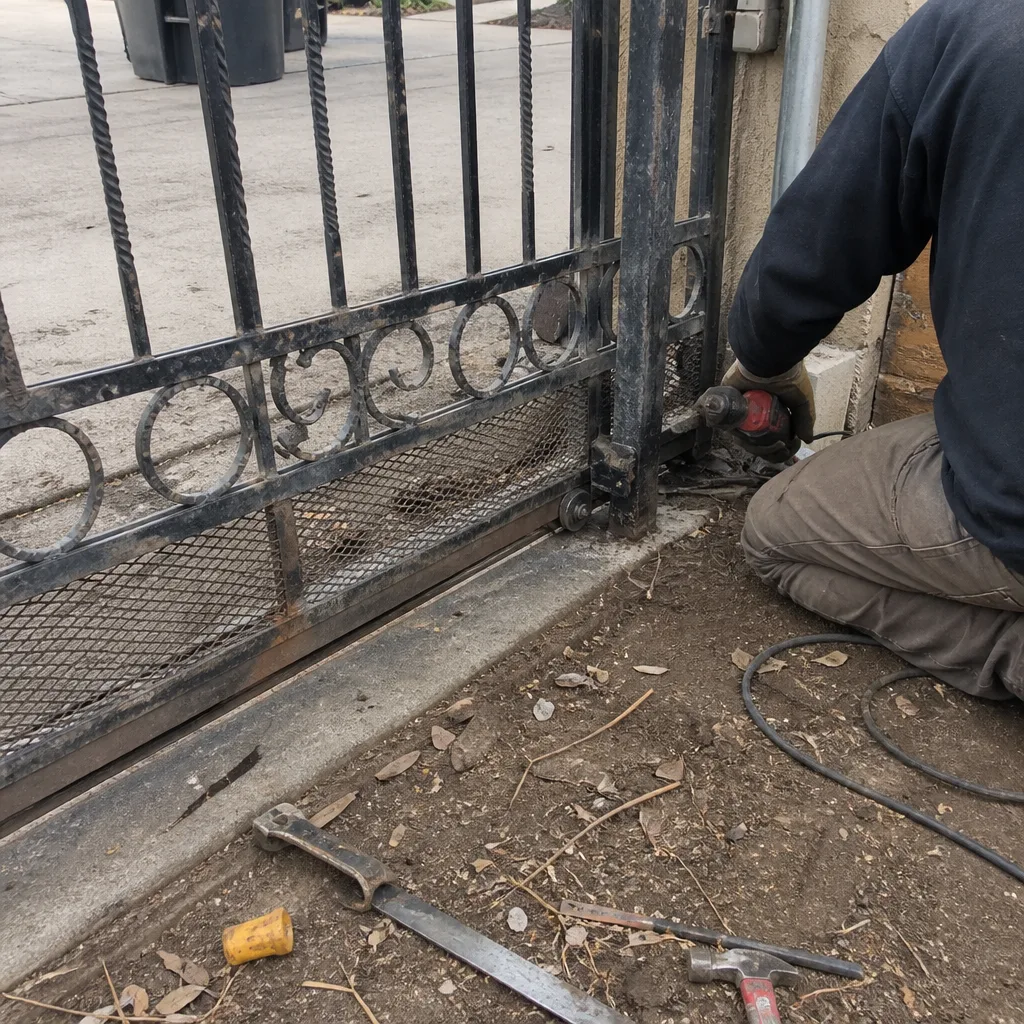 Before
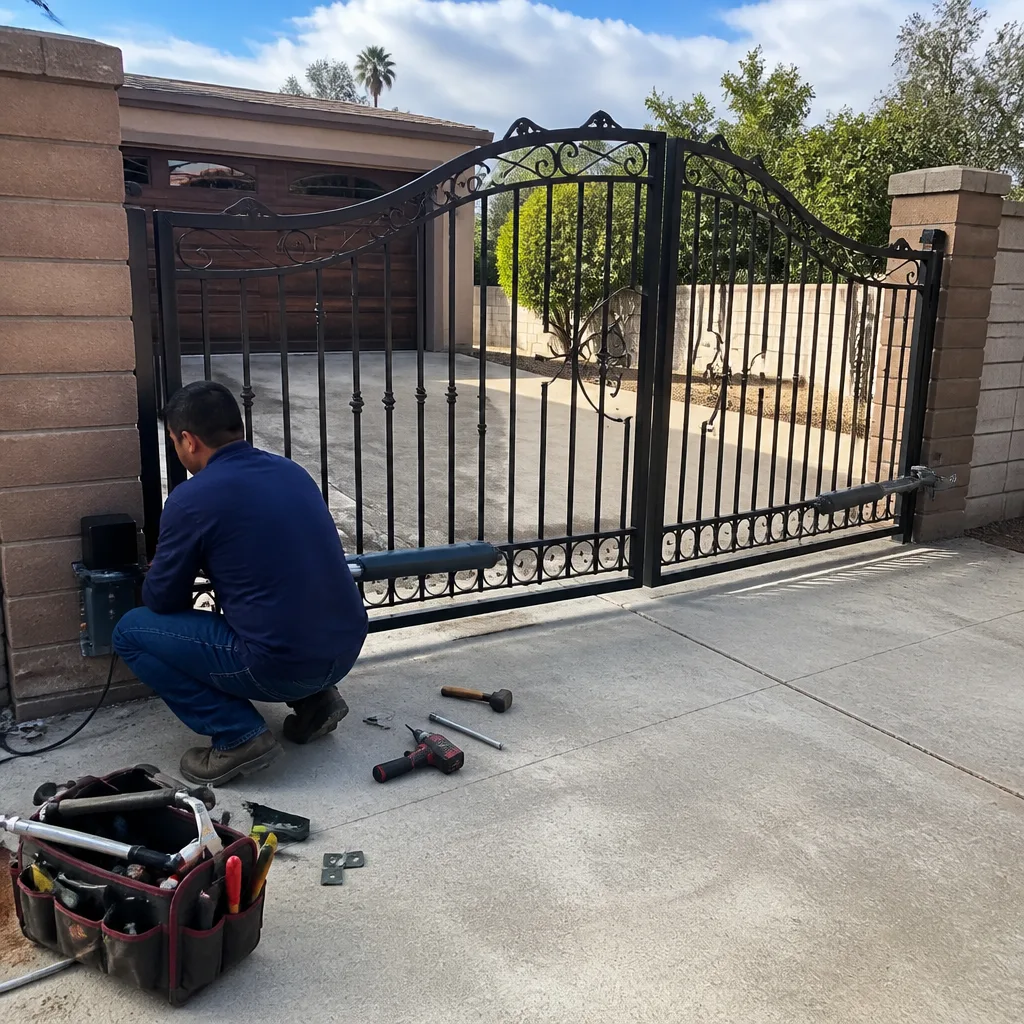 After
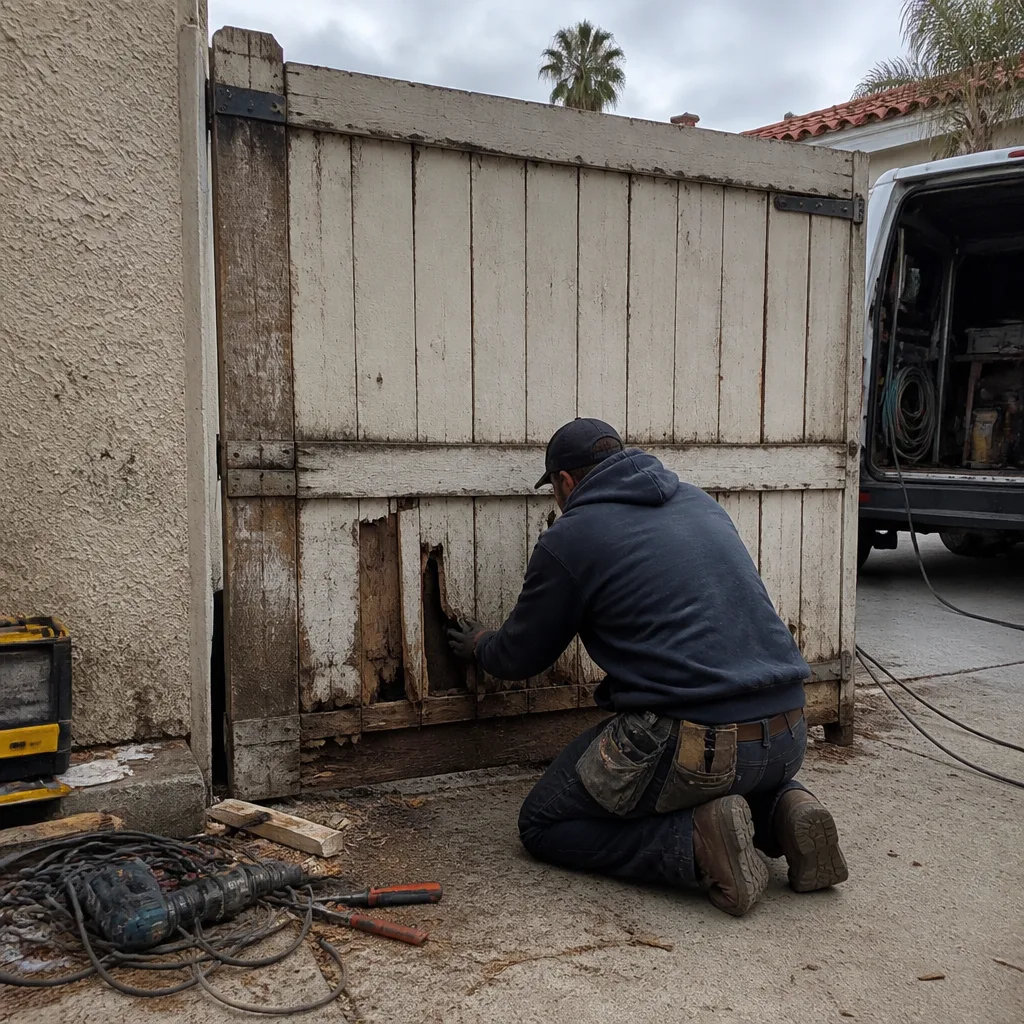 Before
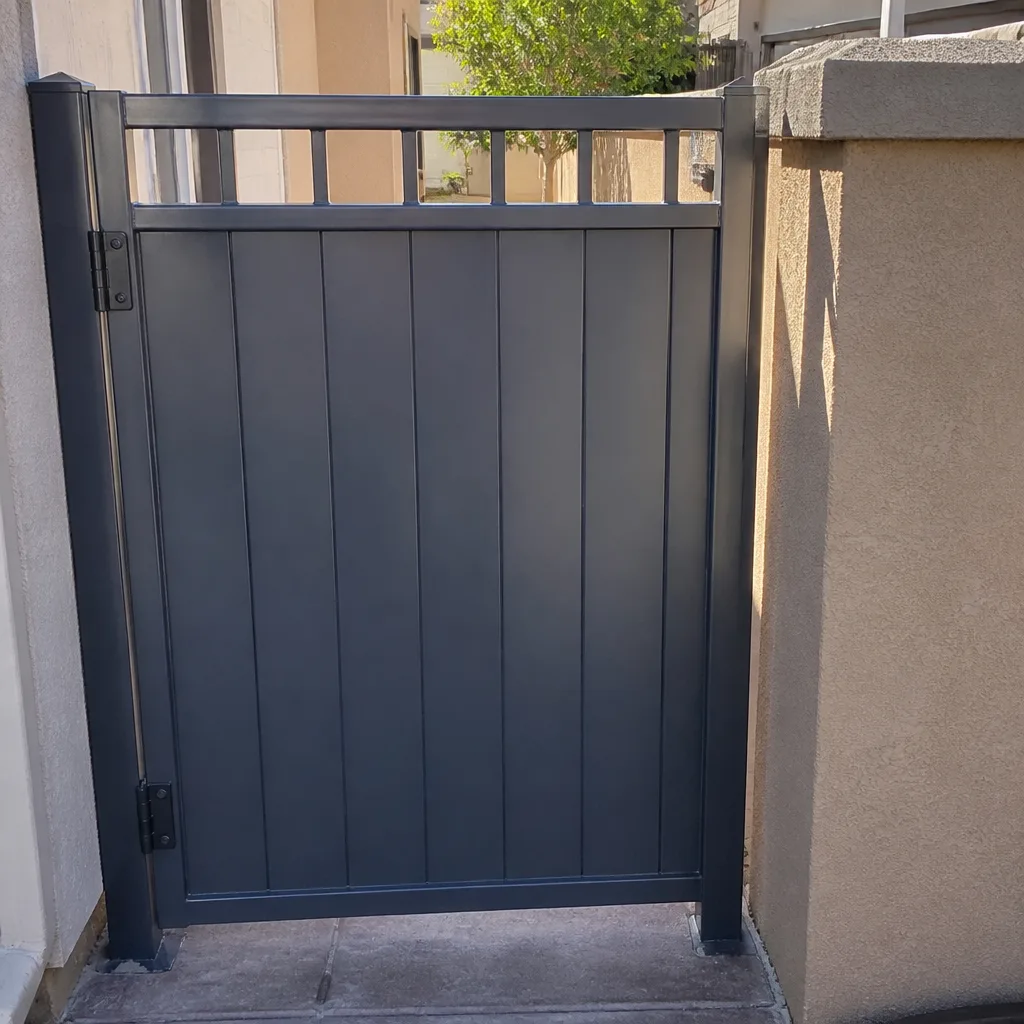 After
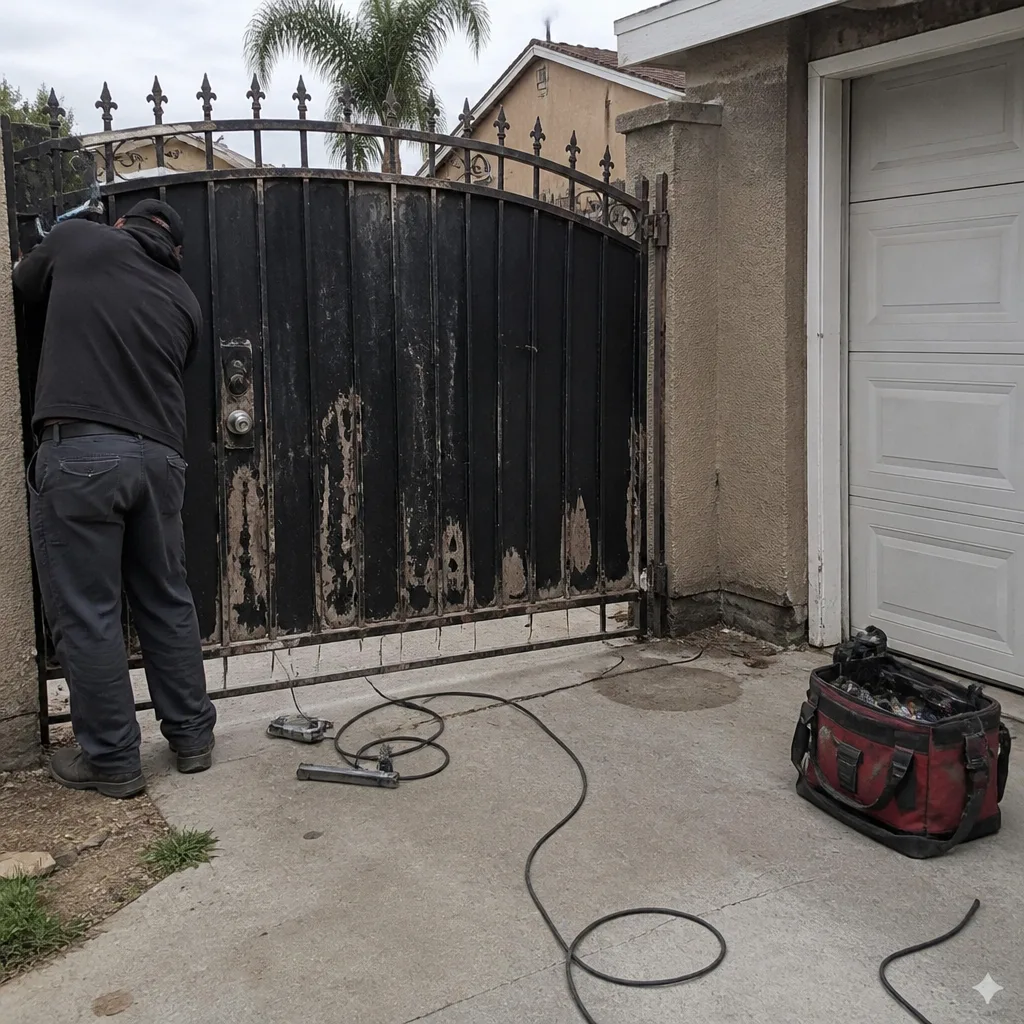 Before
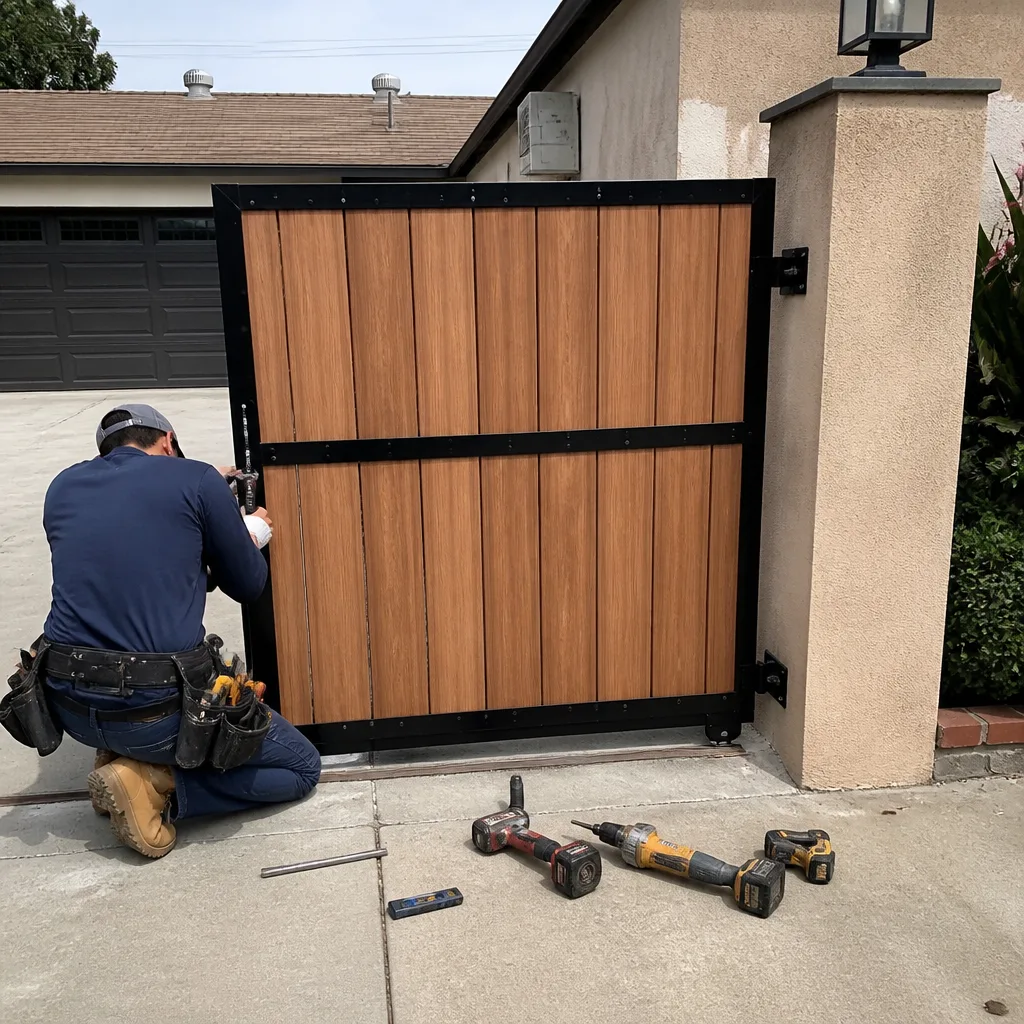 After